EU PPWR 2026: What Flexible Packaging Importers Must Do Before 2030
The Packaging and Packaging Waste Regulation is no longer a proposal — it’s law. Here’s what it means for anyone importing flexible packaging into the EU, and how to get ahead of it.
If you ship flexible packaging — or products packaged in it — into the European Union, you’ve probably heard the acronym PPWR mentioned in webinars and supplier emails. It’s easy to file it away as “another compliance thing.” That would be a mistake.
The EU’s Packaging and Packaging Waste Regulation (PPWR) is the most consequential packaging law Europe has ever passed. Unlike directives that member states translate at their own pace, a regulation applies directly and uniformly across all 27 EU countries. And its deadlines land squarely inside the product development cycles of brands importing packaging today.
Here’s the plain-language version of what it requires, who it affects, and what practical steps importers of flexible packaging should be taking right now.
What the PPWR Actually Requires
The regulation tackles packaging waste on several fronts at once. The provisions with the biggest impact on flexible packaging importers:
1. All packaging must be recyclable by design. By 2030, packaging placed on the EU market must meet design-for-recycling criteria, graded by how recyclable the format actually is. For flexible packaging, this is the earthquake provision: traditional multi-material laminates — the classic PET/ALU/PE or PET/PE structures with mixed, inseparable layers — score poorly under these criteria. Structures built from a single polymer family (all-PE or all-PP) with compatible inks, adhesives, and coatings score far better.
2. Minimum recycled content in plastic packaging. Plastic packaging will need to contain defined percentages of post-consumer recycled (PCR) content, phased in from 2030 with higher targets in 2040. Contact-sensitive food packaging faces specific, more nuanced rules — but the direction is unambiguous: virgin-only plastic structures have a shrinking future in the EU.
3. Packaging minimization. Packaging must not exceed what’s necessary to protect the product — with specific restrictions on empty space and “double packaging.” For flexible packaging, which is already the most material-efficient format available, this is largely good news. But it does formalize the case for downgauging: thinner structures with equal performance, validated by testing rather than assumption.
4. Labeling and information requirements. Harmonized labeling will tell consumers which stream a package belongs in — which means your material choices need to match declared recyclability, honestly. Overstated green claims now carry real legal risk under parallel EU greenwashing rules.
Who’s on the hook? The regulation imposes obligations along the entire supply chain — including companies that import packaging or packaged goods into the EU. If you’re a non-EU manufacturer shipping into Europe, your EU importer carries significant legal responsibility, and they will increasingly push those requirements back onto you as their supplier. Expect PPWR-related questions in your next round of supplier audits.
Why Flexible Packaging Importers Feel This Hardest
Rigid packaging had a head start on recyclability: PET bottles have established collection streams, glass and metal are inherently recyclable. Flexible packaging is different. Multi-layer laminates exist precisely because they deliver barrier properties — moisture, oxygen, light — that no single material can match. The engineering challenge of the decade is keeping that performance while simplifying the structure.
That’s where the innovation race is happening:
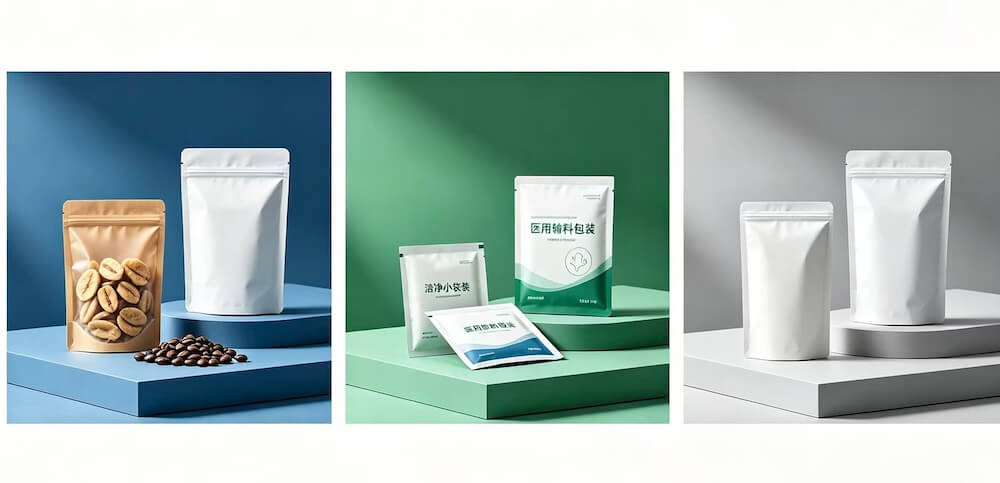
- Mono-material structures. All-PE laminates with high-barrier coatings and metallized options are now commercially viable for snacks, coffee, and pet food — categories once considered impossible without aluminum foil.
- Advanced coatings. Barrier coatings that replace aluminum foil layers while keeping the structure recyclable.
- Paper-based formats. Fiber-based structures with thin functional coatings, leveraging paper’s established recycling streams.
- PCR-compatible films. Film grades engineered to perform with significant recycled content.
The message for buyers: the technology exists, but it lives in the catalogs of converters who have invested in it. Your supplier’s material roadmap is now a strategic question, not a technical detail.
A Practical Timeline for Importers
Here’s a sensible action plan, working backward from 2030:
Now — 2027: Audit and map. Inventory every structure you import into the EU. For each, ask: What is the exact material composition? Which design-for-recycling grade would it earn today? Where are the gaps? Most importers discover that a handful of structures account for most of their volume — prioritize those.
2026–2028: Test alternatives. Work with your converter to trial mono-material or paper-based versions of your priority structures. This takes longer than buyers expect: new structures need barrier validation, seal-lining tests on your filling equipment, drop and transport testing, and shelf-life verification. Budget two production cycles for a confident switch — and don’t wait until 2029, when every importer in your category will be competing for the same converter capacity.
2028–2030: Convert the portfolio. Roll out validated structures across your range, update labeling, gather the documentation your EU partners need, and claim the marketing upside: early movers get to say “compliant and recyclable” while competitors are still testing.

What to Ask Your Current Supplier This Quarter
You don’t need to become a regulation expert — you need a supplier who is one. Five questions that reveal everything:
- “Which of our structures already meet 2030 design-for-recycling criteria, and what’s your evidence?”
- “What mono-material or paper-based alternatives can you offer for our high-barrier products — and can you show barrier test data, not just claims?”
- “Can you supply structures with certified PCR content, and document it?”
- “Are your inks, adhesives, and coatings compatible with recyclability grading?”
- “Can you support the documentation our EU importer will need — declarations of composition, test reports, conformity evidence?”
If the answers are vague, treat it as a supply chain risk, not a marketing inconvenience.
The Upside Hiding in the Compliance Burden
Here’s the part most compliance articles won’t tell you: PPWR is also a commercial opportunity. European consumers consistently rank recyclability as a purchase driver. Retailers are demanding it from brands. A compliant, mono-material or paper-based package isn’t just legal cover — it’s shelf appeal, retailer goodwill, and a story your marketing team can tell with receipts.
The companies that treat 2030 as a deadline will scramble. The companies that treat it as a 2026 product-development brief will own the shelf.
Getting ahead of PPWR? Noupack has spent over 45 years converting film and paper, and we’re already developing mono-material and paper-based structures for EU-bound products — backed by FSC-certified paper, FDA-compliant inks, and full documentation support. Send us your current structures, and we’ll map which ones are PPWR-ready and propose compliant alternatives with real barrier data. The 2030 deadline is fixed; your supplier’s readiness doesn’t have to be the bottleneck.