Flexographic printing, or flexo, has become one of the most versatile and widely used methods for printing on a variety of substrates, including plastic, film, foil, paper, and more. It’s especially popular in the packaging industry due to its ability to print high-quality designs in large volumes, making it ideal for flexible packaging, labels, and even corrugated cartons. However, when it comes to understanding the true capabilities of flexo printing, one of the most important factors to consider is the size limitations.
So, how big can flexo print? The size of a print job in flexography largely depends on several factors, such as the type of press, the material being used, and the requirements of the project. In this blog, we’ll dive into these aspects and break down the various sizes that can be achieved with flexographic printing.
Understanding Flexo Printing: How Does It Work?
Before delving into the specifics of size limitations, it’s important to understand how flexographic printing works. Flexo is a form of relief printing, where ink is applied to raised images on a flexible printing plate. These plates, typically made of photopolymer or rubber, are mounted on rotating cylinders. The ink is transferred from an anilox roll, which meters the ink, onto the raised image area of the plate. This ink is then pressed onto the substrate, creating the printed image.
Flexo printing is known for its ability to print on a wide range of materials, including films, paper, foil, and even non-porous surfaces like plastic. It’s also highly customizable, allowing for both small and large print runs, making it incredibly versatile.
How Big Can Flexo Print? The Different Sizes of Flexo Printing
Flexographic printing presses come in a wide range of sizes, and the size of the print you can achieve depends on the size of the press, the substrate, and the specific design needs of the job. Here’s a breakdown of the different size capabilities of flexo printing:
1. Narrow Web Flexo Printing
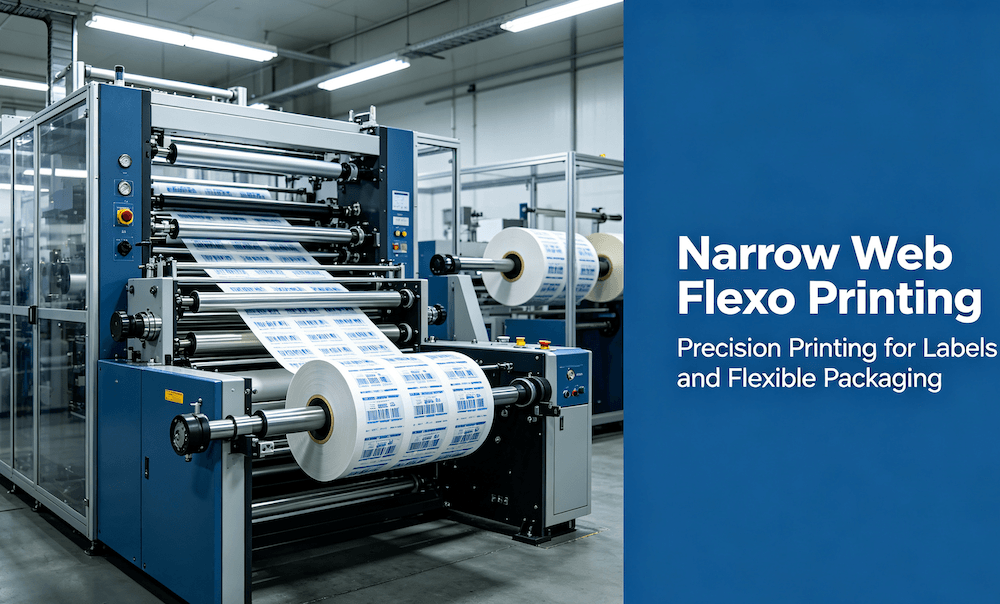
Narrow web flexo printing refers to presses that print on substrates that are 20 inches (508 mm) or less in width. This type of flexo printing is typically used for labels, small packaging, and tags. Narrow web presses are popular in the production of self-adhesive labels, shrink sleeves, and flexible packaging for products such as food, beverages, and cosmetics.
- Typical print size: 6 to 20 inches (152 mm to 508 mm)
- Common applications: Labels, tags, small pouches, and flexible packaging
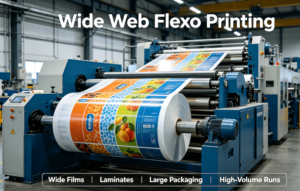
2. Wide Web Flexo Printing
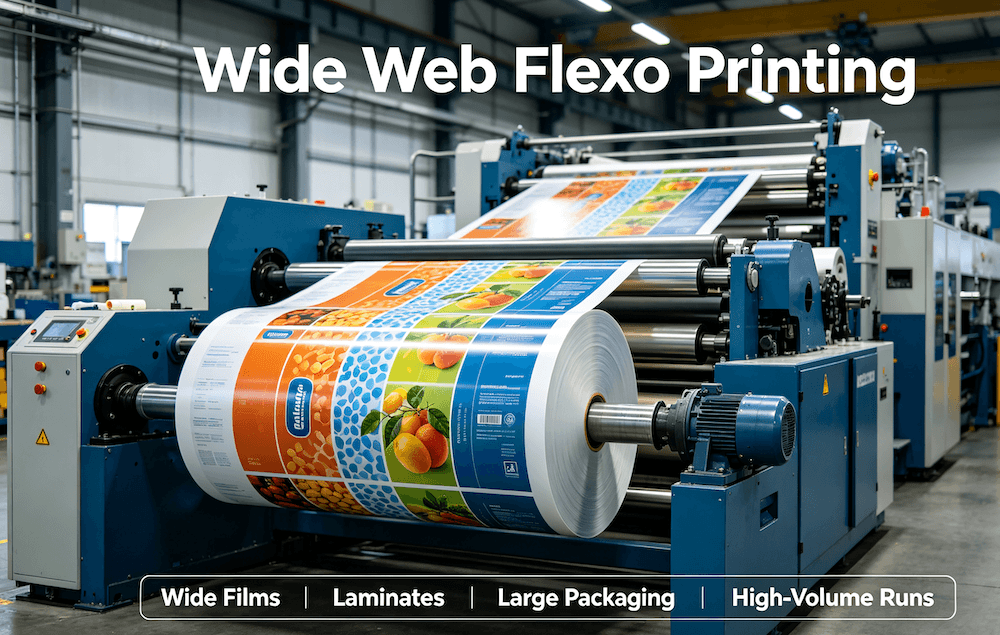
Wide web flexo printing presses are used for larger applications and can print on substrates wider than 20 inches, with some machines able to handle materials up to 60 inches (1524 mm) or more in width. Wide web presses are ideal for producing large flexible packaging such as pouches, wrappers, and rolls. They can also handle larger orders of corrugated boxes and large-scale commercial printing.
- Typical print size: 20 to 60 inches (508 mm to 1524 mm)
- Common applications: Flexible packaging, corrugated boxes, large labels, and large-volume commercial printing
3. Large Format Flexo Printing
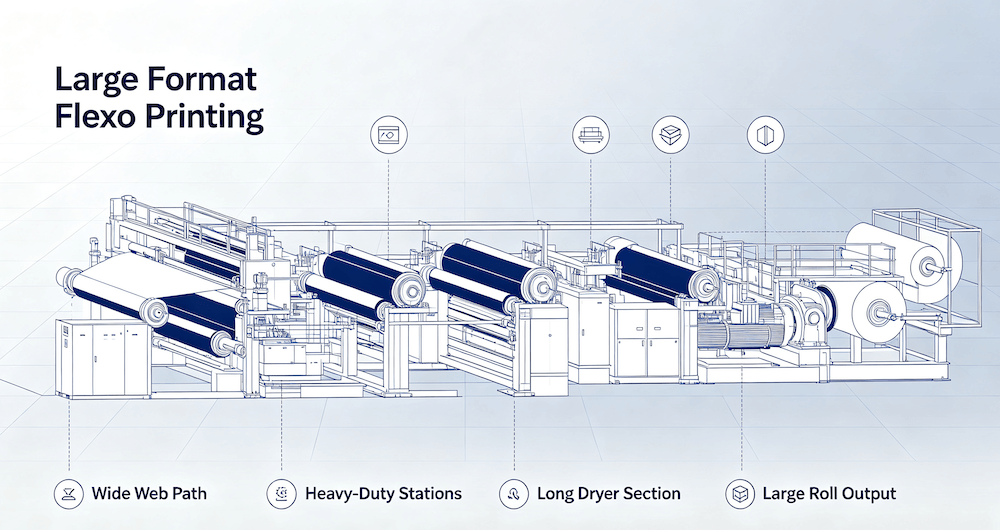
For projects requiring even larger sizes, large format flexo printing presses can print on materials that are over 60 inches (1524 mm) wide. These presses are used for specific applications that require high-volume printing of oversized materials, such as large banners, truck graphics, and extra-large packaging. Large format presses are typically found in specialized printing houses that cater to specific industries like outdoor advertising or large-scale industrial packaging.
- Typical print size: 60 inches (1524 mm) and beyond
- Common applications: Large banners, outdoor signage, industrial packaging
4. Cylinder Size Limitations
The size of the print job in flexography can also be influenced by the cylinder size. Flexographic printing presses use rotating cylinders to transfer the image onto the substrate, and the diameter of these cylinders can limit the maximum print size. For example, if the cylinder diameter is limited to 12 inches, the printed image width will be constrained by this measurement. Larger cylinders, on the other hand, allow for a wider print area.
5. Substrate Considerations
The type of substrate also plays a role in determining the maximum print size. Flexo presses can print on a wide range of materials, but different materials have different limitations in terms of size. For instance, some films and papers may only be available in certain widths, which could restrict the overall print size. Additionally, printing on non-porous materials like plastic and foil may require larger presses and more precise handling to maintain print quality across large surfaces.
6. Plate Size and Design Complexity
Another factor influencing print size is the size and complexity of the flexographic plates. Larger prints require bigger plates, and some designs may involve intricate artwork that demands high levels of detail, which can limit the maximum print size. Plates used in flexographic printing can be custom-made to fit the press size, but the complexity of the design, as well as the size of the plate, can impact both the cost and production time.
What Are the Advantages of Flexo’s Size Capabilities?
One of the key advantages of flexographic printing is its ability to handle a variety of sizes, making it a flexible and adaptable printing method for different packaging applications. Here are some of the key benefits:
- Versatility: Flexo presses can be adapted for different sizes, from small labels to large-scale packaging, depending on your needs.
- High-Speed Production: Flexo printing presses are capable of running at high speeds, making them ideal for large-volume orders and quick turnaround times.
- Cost-Effective for Large Runs: Once set up, flexo printing is highly efficient for large print runs, lowering the cost per unit for large orders.
- Consistent Quality: Flexo printing ensures consistent quality, even on wide materials or large-format prints, making it ideal for mass production of flexible packaging.
When to Choose Flexo Printing for Large-Size Projects
When deciding if flexographic printing is the right choice for your project, consider the following factors:
- Volume: Flexo is highly efficient for large print runs, so it’s ideal if you need to produce large quantities of printed materials at a low cost per unit.
- Substrate: Flexo printing is versatile and can be used on a variety of materials, but certain substrates may limit the maximum print size.
- Print Size: If your project requires small to medium print sizes, flexo is an excellent choice. For very large prints, consider using wide or large format flexo presses.
Conclusion
Flexo printing is a versatile and widely used method for a variety of packaging and label printing applications. The size of the print job that can be achieved with flexo depends on the type of press, substrate, and the complexity of the design. From narrow web flexo printing for labels and small packaging to large format presses for banners and industrial packaging, flexo printing is adaptable to a wide range of print sizes.
For businesses looking for efficient, high-quality printing, flexo offers significant advantages in terms of flexibility, cost-effectiveness, and production speed. By understanding the size limitations and capabilities of flexo printing, businesses can make informed decisions that best meet their packaging and printing needs.
Key Takeaway: Flexo Printing Size Capabilities
Flexo printing is a versatile method capable of handling a wide range of print sizes, from small labels to large-scale flexible packaging. Whether you need narrow web printing for labels or large format printing for banners, flexo offers both high-quality results and fast production speeds, making it an excellent choice for businesses looking to optimize their packaging solutions.