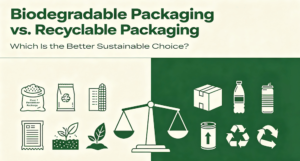
Biodegradable Packaging vs. Recyclable Packaging: Which Is the Better Sustainable Choice?
Sustainability has become a major priority in the packaging industry.
Two terms now appear in almost every packaging conversation: biodegradable packaging and recyclable packaging.
They may sound similar. But they are based on two very different approaches.
Biodegradable packaging is designed to break down under suitable conditions. Recyclable packaging is designed to stay in the material cycle and be used again.
So, which one is better?
The answer is not as simple as choosing the material that sounds more environmentally friendly.
For brands developing new packaging, the right choice depends on the product, the market, the packaging performance, and what happens to the package after use.
Choosing the wrong solution can affect more than sustainability. It can also affect product protection, shelf life, production efficiency, regulatory compliance, and the consumer experience.
Two Different Approaches to Sustainable Packaging
At first glance, biodegradable and recyclable packaging seem to have the same goal. Reduce environmental impact.
But they solve different problems.
Biodegradable packaging is designed to decompose through the action of microorganisms under specific environmental conditions. Depending on the material and conditions, the process can eventually produce substances such as carbon dioxide, water, and biomass.
Recyclable packaging, on the other hand, is designed to be collected, sorted, and processed into raw materials that can be used again.
In simple terms:
- Biodegradable packaging focuses on decomposition.
- Recyclable packaging focuses on material recovery and reuse.
Neither option is automatically better.
The better choice depends on how the package is made, how it is used, and what happens after the consumer throws it away.
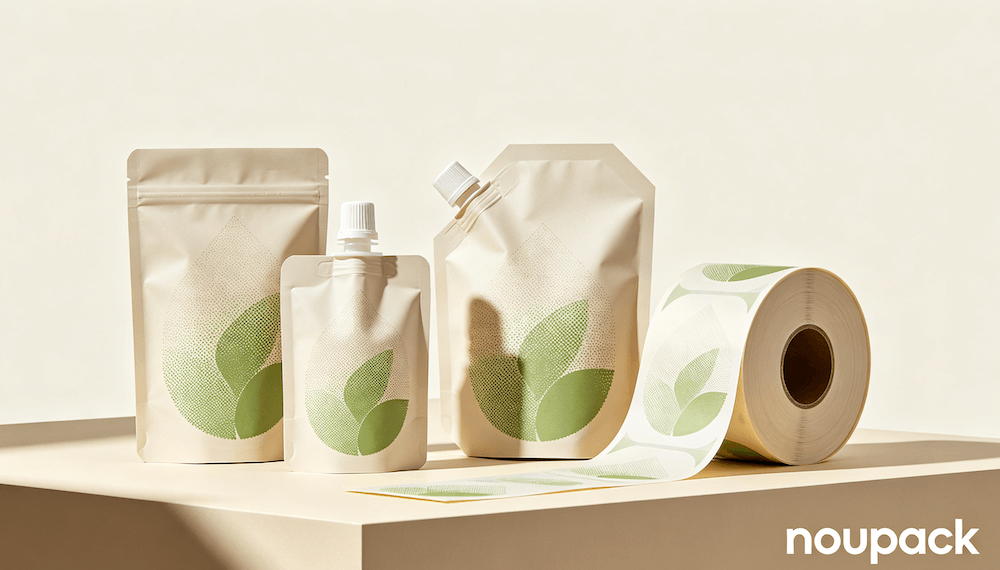
What Is Biodegradable Packaging?
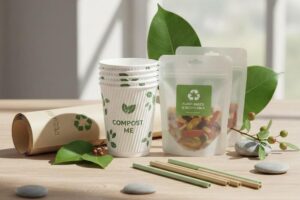
Biodegradable packaging uses materials that can be broken down by microorganisms under suitable conditions.
Some common examples include:
- PLA, or polylactic acid
- PHA, or polyhydroxyalkanoates
- Cellulose-based films
- Paper with biodegradable coatings
These materials are often considered for applications where reducing long-term packaging waste is a major priority.
However, there is an important point to remember.
Biodegradable does not mean that a package will simply disappear anywhere.
Many biodegradable materials require specific conditions to decompose effectively. Some may need industrial composting facilities with controlled temperature, humidity, and microbial activity.
Without the right infrastructure, the expected environmental benefit may not be fully achieved.
This is why brands should look beyond the word “biodegradable” when evaluating packaging.
What Is Recyclable Packaging?
Recyclable packaging is designed to remain in the material cycle.
After use, the package is collected, sorted, and processed into recycled raw materials. These materials can then be used to manufacture new products.
Common recyclable packaging materials include:
- Paper and cardboard
- Aluminum
- Glass
- Mono-material PE packaging
- Mono-material PP packaging
Flexible packaging is also moving toward mono-material structures.
For example, all-PE pouch structures can be designed to improve recyclability while still providing the performance needed for many packaging applications.
But there is another important point.
A package being technically recyclable does not always mean it will actually be recycled.
The package still needs to be collected, sorted, and processed by the local recycling system.
This means the same packaging structure may have a different environmental outcome in different markets.
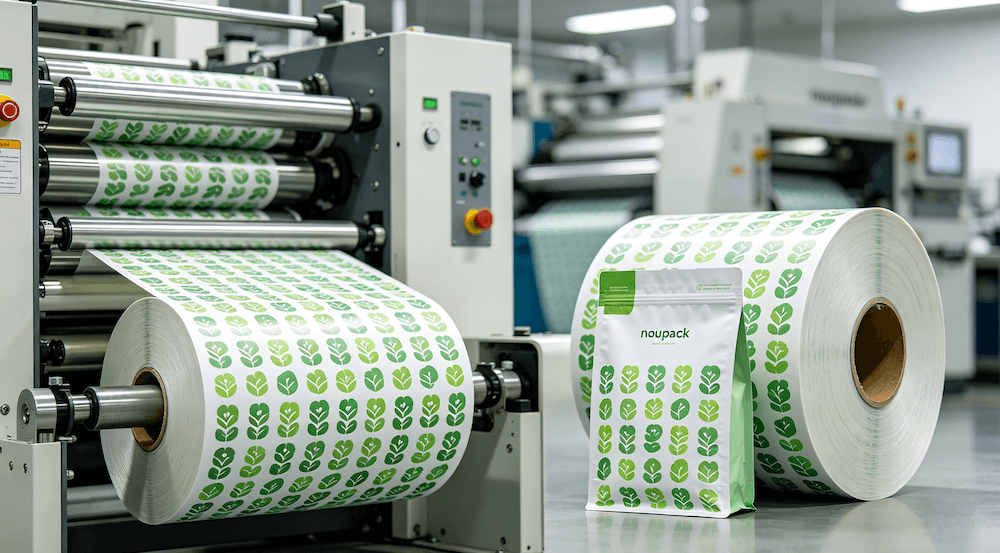
Performance Still Comes First
Sustainability is important.
But packaging has a basic job first.
It needs to protect the product.
If packaging fails to protect food, cosmetics, pharmaceuticals, or other products, the result can be product waste, quality issues, customer complaints, or even recalls.
And product waste has an environmental cost too.
Traditional multilayer flexible packaging is popular for a reason. Different layers can provide different functions, including:
- Oxygen barrier
- Moisture barrier
- Mechanical strength
- Heat resistance
- Reliable sealing
- Printability
Biodegradable and recyclable materials have made significant progress. But depending on the application, there can still be performance trade-offs.
For example, some biodegradable materials may have limitations in heat resistance or moisture barrier performance.
Mono-material recyclable structures can also require careful material selection and structural design to achieve the barrier performance needed for demanding products.
This is why sustainability should never be evaluated separately from packaging performance.
Infrastructure Makes a Difference
What happens after the package is used matters just as much as the material itself.
Biodegradable packaging needs suitable conditions for decomposition.
If industrial composting is not available, the package may not break down as intended.
Recyclable packaging faces a similar challenge.
If local recycling systems cannot collect, sort, and process the material, its theoretical recyclability may have little practical value.
This creates an important difference between designing packaging to be recyclable and having packaging that is actually recycled.
For brands selling products internationally, this becomes even more important.
A packaging solution that works well in one market may not have the same end-of-life pathway in another.
So when choosing sustainable packaging, brands should consider the waste management infrastructure of the actual target market.
Where Is Biodegradable Packaging Commonly Used?
Biodegradable materials are often considered for products with relatively short life cycles.
Typical applications include:
- Fresh produce
- Organic foods
- Food service packaging
- Disposable tableware
- Compostable shopping bags
These applications often place greater emphasis on reducing post-consumer waste and may be suitable where composting infrastructure is available.
Where Is Recyclable Packaging Commonly Used?
Recyclable packaging is widely used across many consumer product categories.
Examples include:
- Beverage packaging
- Household products
- Personal care products
- Retail packaging
- Flexible food packaging
Mono-material PE structures are becoming an increasingly important option for flexible packaging.
They can help brands move toward recyclable packaging while maintaining the lightweight and efficient characteristics that make flexible packaging attractive.
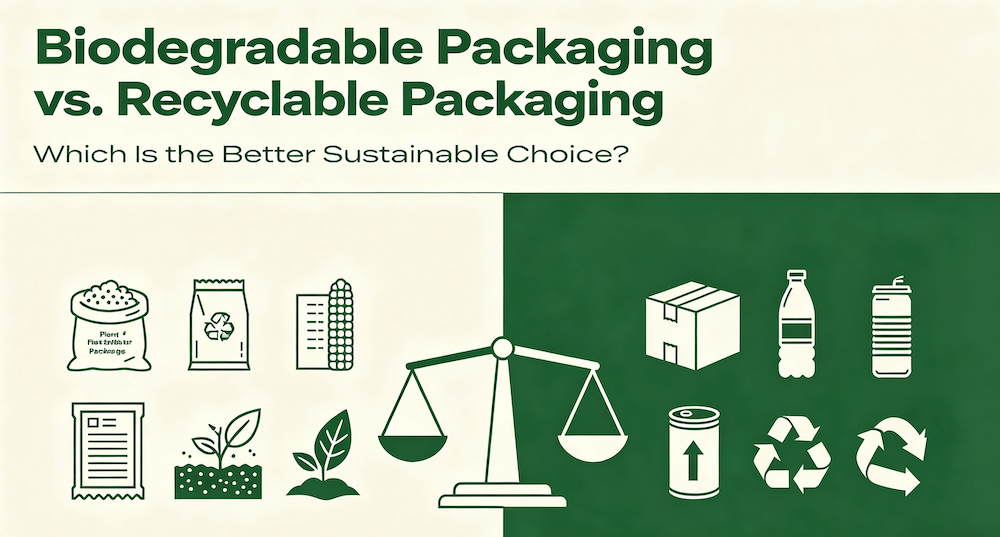
Biodegradable or Recyclable. Which Is More Sustainable?
This is probably the most common question.
There is no universal answer.
A recyclable mono-material pouch may be the better option in a market with a well-developed recycling system.
In another application, biodegradable packaging may make more sense when suitable composting infrastructure is available and material recovery is difficult.
The right choice depends on several factors:
- Product shelf-life requirements
- Oxygen and moisture barrier needs
- Mechanical performance
- Filling and sealing conditions
- Local recycling infrastructure
- Local composting infrastructure
- Consumer disposal behavior
- Regulatory requirements
- Overall lifecycle impact
Instead of asking, “Which material is greener?”
A better question is:
“Which packaging solution has the lowest overall environmental impact while still doing its job?”
That is a much more useful way to approach sustainable packaging.
A Practical Way to Choose
Before choosing between biodegradable and recyclable packaging, brands should ask a few simple questions.
Does the product need a high barrier?
If the product is sensitive to oxygen or moisture, barrier performance needs to be a priority.
How long does the product need to stay fresh?
Long shelf-life products may require a more advanced packaging structure.
What happens after the package is used?
Check the actual recycling or composting options in the target market.
What does the brand’s sustainability strategy require?
Different brands have different sustainability goals. The packaging structure should support those goals without compromising product performance.
What regulations apply to the market?
Packaging regulations are changing. A material that works today may face different requirements in the future.
These questions often matter more than simply choosing a material because it is labeled “green.”
Noupack’s View: Sustainable Packaging Should Be Practical
At Noupack, we believe sustainable packaging should start with the real needs of the product.
There is no single material that is the perfect answer for every application.
Sometimes a biodegradable structure is the right choice.
Sometimes a recyclable mono-material pouch makes more sense.
And sometimes the most responsible solution is to use a high-performance structure that significantly reduces material usage while protecting the product throughout its shelf life.
We also believe that packaging sustainability is not only about what the package is made of.
It is about the whole system.
The material.
The package structure.
The amount of material used.
The production process.
The transportation efficiency.
The product shelf life.
And finally, what happens after the package is used.
For example, a lightweight flexible pouch can use significantly less packaging material and transportation space than many rigid packaging formats. At the same time, a well-designed mono-material structure can provide a pathway toward better recyclability.
The key is to find the right balance.
At Noupack, we look at packaging from a practical perspective. We consider product protection, barrier requirements, sealing performance, manufacturing efficiency, cost, and end-of-life options together.
Because sustainable packaging should not simply look sustainable.
It should work.
Final Thoughts
Biodegradable and recyclable packaging are not competing technologies.
They are two different strategies for addressing environmental challenges.
Biodegradable materials aim to break down under appropriate conditions.
Recyclable materials aim to keep valuable materials in circulation.
The best packaging solution is the one that balances product protection, environmental responsibility, manufacturing practicality, and end-of-life management.
In the end, sustainable packaging is not about choosing the newest material or the material with the best marketing story.
It is about making a smarter packaging decision based on the entire lifecycle of the product.
The best sustainable packaging is not simply the one that sounds greener. It is the one that performs well, uses resources responsibly, and makes sense in the real world.