There is a long-standing misconception in the disinfection consumables industry: alcohol pad packaging is often treated as a low-cost accessory rather than an important part of the product.
Most brands focus on the things that are easy to compare. Pad material, alcohol concentration, disinfection performance, and unit price. Packaging is often reduced to one basic question: Can it hold the pad and keep it sealed?
But packaging does much more than that.
A poorly designed package can lead to alcohol loss, dried-out pads, damaged products, difficult opening, and unnecessary product waste. It can also affect how the product feels in the hands of the user and how the brand is perceived at the point of sale.
This is one reason why many alcohol pad products look similar in the market, while brands continue to compete heavily on price.
At NOUPACK, we see alcohol pad packaging differently.
The package is not just a container. It is part of the product.
For alcohol pads, the packaging needs to do several jobs at the same time. It must retain volatile ethanol over a long storage period, protect the pad from external contamination, provide reliable sealing, and still be easy to tear and carry.
That makes alcohol pad packaging more demanding than it may appear.
Why Alcohol Pad Packaging Needs More Than Basic Sealing
Traditional alcohol pad packaging often uses standard plastic-aluminum laminates or all-plastic films.
These structures can meet basic packaging requirements. But depending on the material combination and manufacturing quality, they may face challenges during long-term storage and everyday use.
1. Alcohol Retention and Shelf Stability
Ethanol is highly volatile. Packaging therefore needs to provide an effective barrier against the loss of alcohol over time.
When the packaging structure does not provide sufficient barrier performance, alcohol can gradually migrate or evaporate through the packaging material. Exposure to air and other external conditions can also affect the stability of the product.
The result is simple. A pad that was properly saturated when it left the factory may not perform the same way after extended storage.
For brands, this can mean product loss and customer complaints.
For users, it means opening a package and finding a pad that is too dry to use as intended.
This is why barrier performance should be considered from the beginning of the packaging design process, rather than treated as an afterthought.
2. Easy Opening Without Compromising Safety
Alcohol pads are often used when convenience matters.
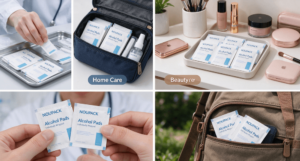
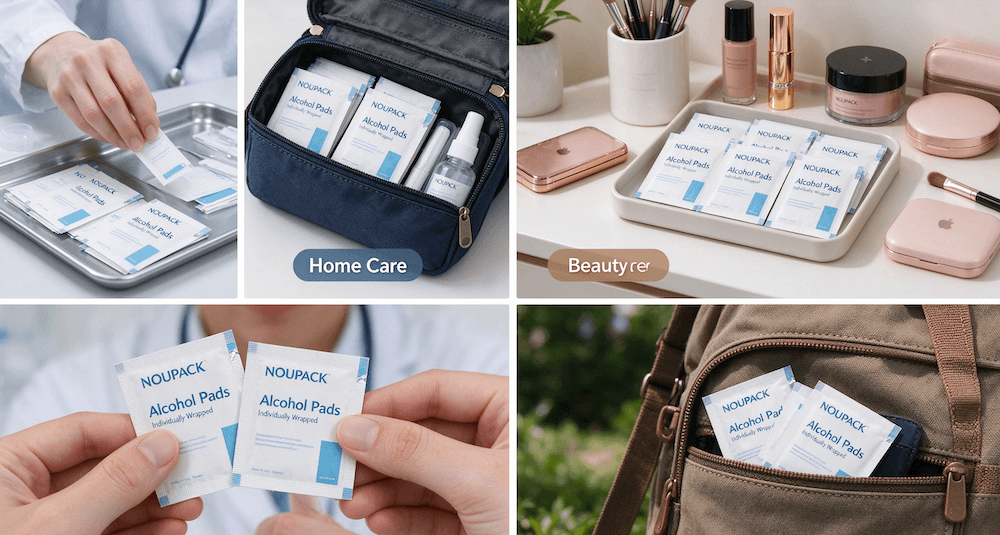
They may be carried in first-aid kits, pockets, handbags, cosmetic bags, or medical environments. Users should be able to open the package quickly without scissors or other tools.
But easy opening needs to be controlled.
Poorly designed tear structures can cause the package to tear unevenly. In some cases, the pad may become deformed during opening, or small pieces of packaging material may be left behind.
This is especially important in medical and professional applications, where packaging cleanliness and product integrity are critical.
A good easy-open design should make the package simple to open while keeping the pad protected.
3. Material Feel and Product Positioning
Packaging also communicates product quality.
All-plastic packaging can be functional and economical, but its appearance may not always match the positioning of a premium product.
Standard plastic-aluminum structures can provide good barrier performance, but their rigidity and surface appearance may not deliver the tactile experience some brands are looking for.
For premium alcohol pads, packaging needs to do more than protect the product. It should also support the brand.
Surface texture, print quality, flexibility, and overall appearance all contribute to the experience.
As brands move into premium retail, medical beauty, travel, and cross-border markets, these details become increasingly important.
NOUPACK’s Approach: Paper-Aluminum Composite Packaging
At NOUPACK, we developed our paper-aluminum composite structure with these requirements in mind.
The goal is not simply to add more material.
It is to combine different materials so that each layer performs a specific function.
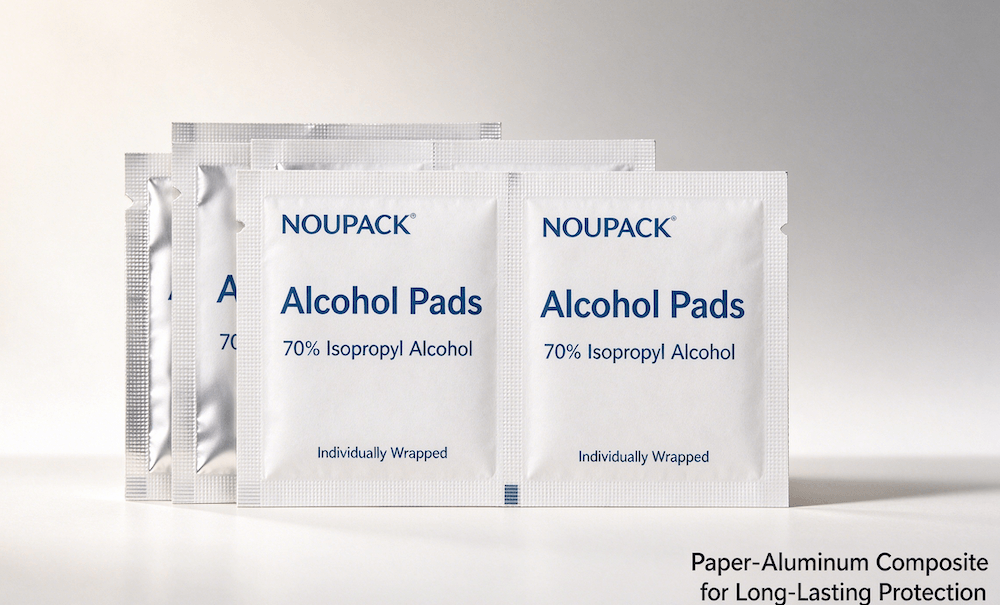
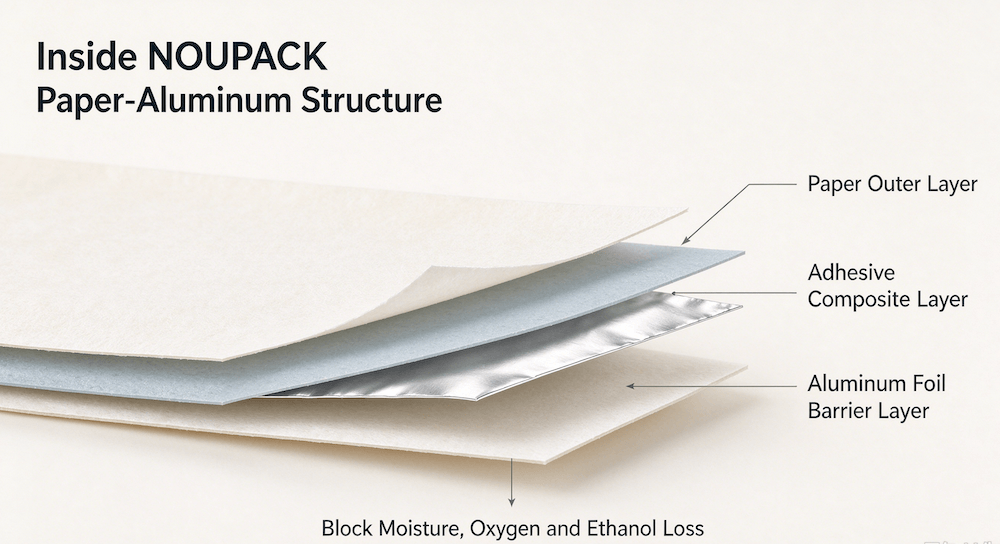
The paper layer provides a distinctive surface with good printability and a more refined, natural appearance. The aluminum foil layer provides a dense barrier against light, oxygen, moisture, and the loss of volatile contents.
Together, these layers create a packaging structure designed specifically around the requirements of alcohol pad applications.
A Barrier Structure Designed for Alcohol Pads
The aluminum foil layer is an important part of the structure.
Its high barrier properties help reduce the transmission of oxygen, moisture, and other external factors. For alcohol pads, this is particularly important because maintaining the intended alcohol content is closely related to package integrity.
The paper outer layer also provides physical protection during handling, transportation, and storage.
The result is a structure that combines barrier performance with a more flexible and tactile outer surface.
For products with demanding shelf-life requirements, material selection and structural design need to work together. Packaging performance should be evaluated as a complete system rather than by looking at a single layer in isolation.
Designed for Easy and Clean Opening
One of the biggest differences between packaging that simply works and packaging that works well is the opening experience.
NOUPACK paper-aluminum composite packaging can be designed with controlled tear features to make opening easier and more consistent.
The goal is simple:
Open easily. Tear cleanly. Keep the pad intact.
This matters in everyday use, but it matters even more in professional applications where product cleanliness and handling are important.
The flexible structure also makes the package easy to carry and store. It can fit naturally into first-aid kits, cosmetic bags, pockets, and travel kits without taking up unnecessary space.
Different paper weights, foil thicknesses, pouch dimensions, and opening designs can also be considered according to the application.
Medical products may have different requirements from household, beauty, or outdoor products.
Packaging should reflect those differences.
A Different Look for a Familiar Product
Packaging is also one of the easiest ways for a brand to differentiate a product.
Paper-aluminum composite packaging offers a different visual and tactile experience from conventional plastic packaging.
The matte paper surface provides a more refined appearance and offers a good printing surface for logos, product information, instructions, and other brand elements.
For brands targeting premium supermarkets, medical beauty institutions, travel products, or cross-border e-commerce, this can create a stronger connection between packaging quality and product positioning.
It is not simply about making the package look more expensive.
It is about making the packaging feel consistent with the product inside.
Manufacturing Quality Matters
Even the right material structure cannot perform well without good converting and sealing processes.
Lamination quality, die cutting, tear design, and sealing conditions all affect the final package.
Poor process control can result in problems such as delamination, incomplete seals, damaged edges, or inconsistent tearing.
At NOUPACK, we pay attention to the entire converting process rather than focusing only on the material structure.
Consistent lamination and sealing help maintain package integrity throughout transportation and storage. Controlled die cutting helps ensure a more predictable opening experience.
For high-volume products, this consistency is especially important.
Small packaging defects can become significant losses when they are repeated across thousands or millions of units.
Sustainability Needs to Be Considered Carefully
Sustainability is becoming an increasingly important part of packaging development.
But it is also important to look at the whole structure rather than making simple claims based on one material.
Paper-aluminum composite packaging can reduce the reliance on conventional plastic-based structures and provide a different option for brands looking to improve the material profile and appearance of their packaging.
At the same time, sustainability should always be considered alongside product protection, shelf life, manufacturing requirements, and end-of-life options.
For us, better packaging does not mean choosing a material simply because it sounds more sustainable.
It means finding the right balance between performance, material use, product protection, and practical application.
What the Future of Alcohol Pad Packaging Looks Like
The alcohol pad market is changing.
As consumers and professional users pay more attention to product safety, convenience, quality, and appearance, packaging is becoming an increasingly important part of product development.
We believe several trends will shape the next generation of alcohol pad packaging:
- Better barrier performance for improved product stability
- More user-friendly opening designs for easier and cleaner use
- Higher-quality surfaces and printing for stronger brand differentiation
- More application-specific structures designed for medical, beauty, household, and outdoor use
- More thoughtful material choices that balance performance and sustainability
The future is not simply about replacing one material with another.
It is about designing packaging around the actual needs of the product and the people who use it.
NOUPACK’s View
At NOUPACK, we believe alcohol pad packaging deserves more attention than it usually gets.
The pad may be the product, but the package determines how well that product survives the journey from manufacturing to the user’s hands.
That means packaging needs to protect the alcohol pad, maintain product integrity, open easily, travel well, and represent the quality of the brand.
Our paper-aluminum composite structure is one solution we developed for these needs.
But we do not believe there is one packaging structure that works for every product.
Different alcohol concentrations, pad materials, package sizes, shelf-life requirements, filling processes, and target markets can call for different solutions.
That is why we focus on structure, process, and customization, rather than simply selling a standard film.
For alcohol pad brands looking to move beyond price competition, packaging can be a practical place to create real differentiation.
Good packaging should not just contain the product. It should protect it, support it, and add value to it.
That is the role we believe flexible packaging should play at NOUPACK.