Aluminum Foil vs. Metallized PET: Which Barrier Material Is Right for Your Packaging?
When designing flexible packaging, choosing a barrier material is rarely just a technical decision. It directly affects product shelf life, packaging cost, production efficiency, and ultimately customer satisfaction.
Among the many barrier materials available today, Aluminum Foil (AL) and Metallized PET (MPET) are two of the most widely used options. Both offer excellent barrier properties and a metallic appearance, but their performance differs significantly in real-world applications.
Understanding these differences helps brands make smarter packaging decisions and avoid unnecessary costs.
Understanding the Difference
Although aluminum foil and MPET may look similar, they are fundamentally different materials.
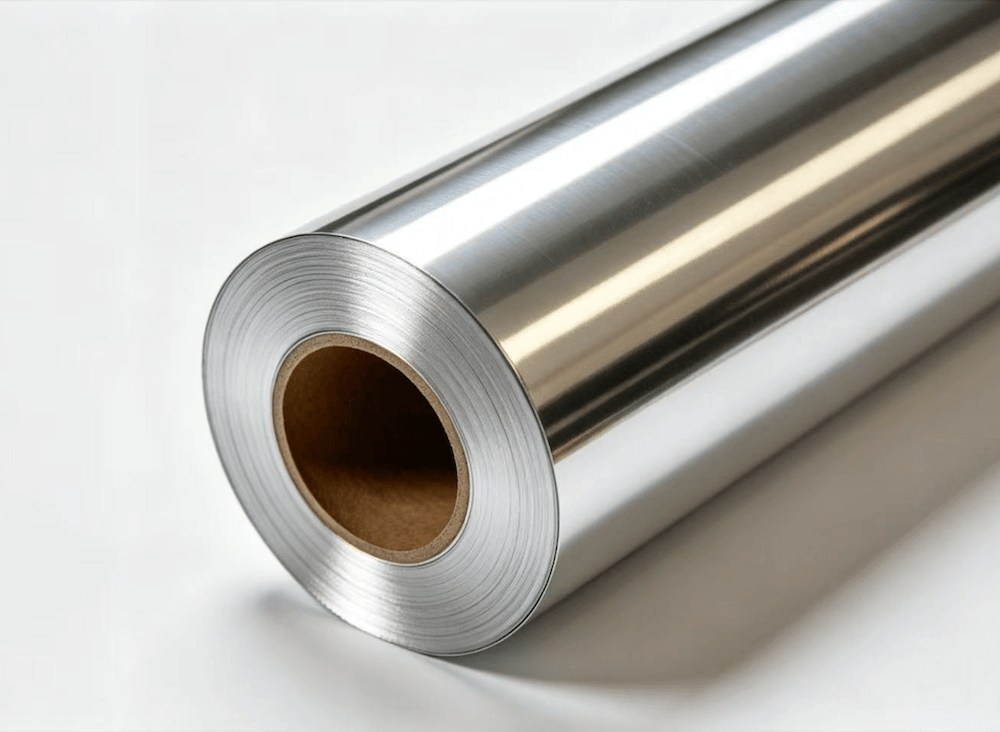
Aluminum Foil is a solid metal layer laminated between plastic films such as PET, NY, or PE. Because it is a continuous sheet of metal, it provides an almost complete barrier against oxygen, moisture, and light.
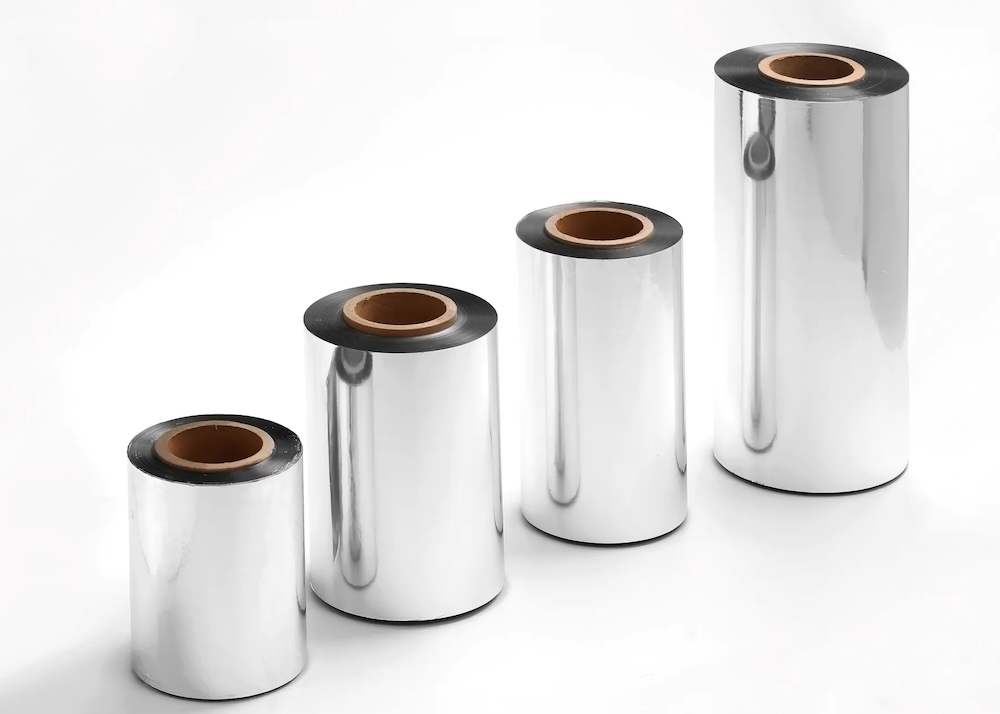
Metallized PET (MPET) is a polyester film coated with an ultra-thin layer of aluminum through vacuum metallization. The aluminum layer is microscopic compared to foil, giving MPET enhanced barrier performance while maintaining the flexibility of a plastic film.
This structural difference is the reason their performance varies so greatly.
Barrier Performance: Maximum Protection vs. Cost-Effective Protection
When it comes to oxygen and moisture resistance, aluminum foil remains the industry benchmark.
Its near-zero transmission rates make it ideal for products that are highly sensitive to environmental exposure, including:
- Pharmaceutical products
- Nutritional supplements
- High-fat foods
- Dairy powders
- Long shelf-life products
MPET also provides strong barrier performance, but it is not completely impermeable. Small amounts of oxygen and moisture can still pass through the structure over time.
In simple terms:
| Material | Barrier Performance |
|---|---|
| Aluminum Foil | Near-total protection |
| MPET | High barrier, but not absolute |
For many food and consumer products, MPET delivers more than enough protection. However, when product stability is critical, aluminum foil remains the safer choice.
Light Protection: Complete Darkness or Practical Shielding?
Light exposure is one of the most overlooked causes of product degradation.
Aluminum foil provides complete protection against both UV and visible light, making it suitable for products that are sensitive to oxidation, color change, or nutrient loss.
MPET significantly reduces light transmission but cannot eliminate it entirely. Depending on metallization quality and film thickness, trace amounts of light may still penetrate the package.
For products such as:
- Coffee
- Protein powder
- Milk powder
- Functional foods
- Pharmaceutical products
this difference can directly impact shelf-life performance.
Cost Considerations
Superior barrier performance comes at a price.
Aluminum foil structures generally cost more because of:
- Higher raw material costs
- More complex lamination processes
- Increased sensitivity during converting and pouch making
MPET offers a more economical solution while still delivering strong barrier properties.
For brands operating in highly competitive markets, MPET often provides the best balance between protection and packaging cost.
Mechanical Strength and Processing Performance
Barrier performance is only one part of the equation.
Aluminum foil is naturally more fragile and can develop pinholes if subjected to excessive folding, stretching, or mechanical stress.
MPET, being film-based, offers several processing advantages:
- Better flexibility
- Higher crack resistance
- Improved durability during transportation
- Better performance on high-speed packing lines
These characteristics make MPET particularly attractive for applications requiring efficient production and robust handling.
When Should You Choose Aluminum Foil?
Aluminum foil is typically recommended when:
- Maximum oxygen and moisture protection is required
- Complete light blocking is essential
- Shelf life requirements are extremely demanding
- Product value justifies a premium packaging structure
Examples include pharmaceutical sachets, freeze-dried foods, premium nutritional products, and sensitive chemical formulations.
When Is MPET the Better Choice?
MPET is often the preferred solution when:
- Barrier requirements are moderate to high
- Packaging cost is a major consideration
- Greater flexibility is needed
- Small amounts of light transmission are acceptable
Common applications include snacks, coffee, dry foods, pet food, household products, and various consumer goods.
The Most Common Mistake: Over-Specifying Barrier Materials
One of the most common mistakes in packaging design is assuming that higher barrier always means better packaging.
In reality, excessive barrier protection often increases material costs without delivering meaningful benefits to the product.
Conversely, insufficient barrier performance can lead to product degradation, customer complaints, and costly recalls.
The ideal packaging structure should always be determined by:
- Product sensitivity
- Shelf-life target
- Distribution environment
- Storage conditions
- Cost objectives
The best packaging is not necessarily the strongest—it is the one that is properly engineered for the application.
Noupack’s Perspective
At Noupack, we frequently help customers evaluate whether aluminum foil structures are truly necessary or whether a well-designed MPET laminate can achieve the same commercial objective at a lower cost.
In many projects, customers initially request foil laminates simply because they associate foil with premium quality. However, after analyzing the product characteristics, distribution conditions, and shelf-life requirements, we often find that a high-performance MPET structure can provide sufficient protection while significantly reducing packaging costs.
On the other hand, for highly sensitive products such as pharmaceutical sachets, nutritional powders, and moisture-sensitive formulations, aluminum foil remains the most reliable long-term solution.
Rather than recommending a material based solely on barrier data, Noupack focuses on optimizing the entire packaging system—including material structure, sealing performance, converting efficiency, logistics conditions, and total packaging cost.
Because in flexible packaging, barrier is not just a material property—it is part of a complete product protection strategy.
Final Thoughts
Aluminum foil and metallized PET each have their own advantages. Neither material is universally better; the right choice depends on your product requirements and business objectives.
The most successful packaging solutions balance protection, performance, manufacturability, and cost. When those factors are properly aligned, packaging becomes a competitive advantage rather than simply a packaging expense.