Butter and Cheese Easy-Peel Film: Reliable Sealing, Easy Opening, and Shelf-Life Protection
Butter and cheese packaging needs to do two things well. It must protect the product during storage and transportation, and it must be easy for consumers to open.
These requirements may sound simple, but getting the balance right takes careful packaging design. A seal that is too strong can make the package difficult to open. A seal that is too weak may increase the risk of leakage or accidental opening. And even a well-designed film can underperform if it does not match the tray material or sealing conditions.
This is where easy-peel lidding film comes in. Designed to provide a controlled seal that consumers can open without excessive force, it offers a practical solution for many butter, cheese, and other dairy packaging applications.
But easy opening is only part of the picture. The right film must also provide suitable barrier protection, maintain seal integrity, and perform consistently on the packaging line.
Why Butter and Cheese Need More Than a Basic Seal
Butter and cheese have different packaging needs, depending on their composition, format, and storage conditions.
Butter is sensitive to oxygen, light, and temperature changes. Exposure to oxygen can contribute to oxidation and affect flavor. Light can also accelerate quality deterioration in some products. Packaging therefore plays an important role in protecting butter throughout its intended shelf life.
Cheese presents a wider range of challenges. Sliced cheese, processed cheese, soft cheese, and portioned cheese may require different levels of oxygen and moisture protection. Some products also need to retain their aroma while preventing contamination from the external environment.
For both butter and cheese, the seal is just as important as the film itself.
A film may offer good barrier properties, but those properties cannot compensate for a weak or damaged seal. If the seal fails during filling, transportation, or storage, the package may no longer provide the protection the product needs.
That is why easy-peel packaging must balance several factors:
- Barrier performance to help protect product quality.
- Seal integrity to reduce the risk of leakage and contamination.
- Controlled peelability for convenient opening.
- Mechanical strength to withstand handling and distribution.
- Consistent performance under actual production conditions.
The challenge is not to maximize one property. It is to make these properties work together.
What Is Easy-Peel Lidding Film?
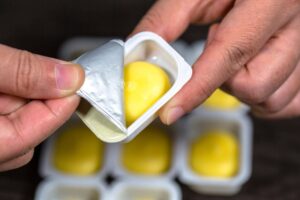
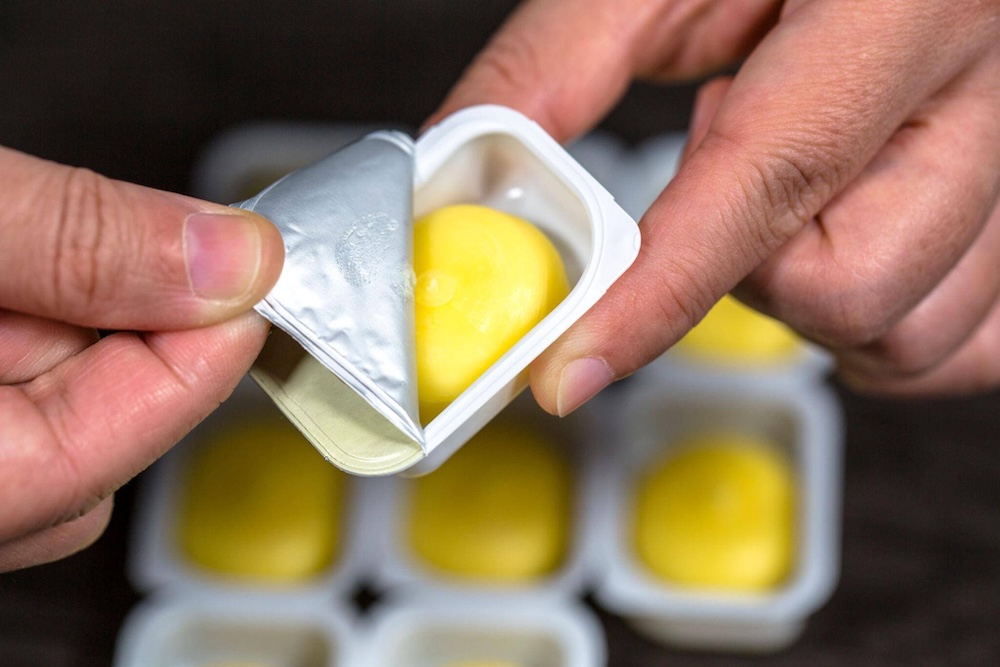
Easy-peel film is a sealing material designed to form a controlled bond with a compatible tray or container.
Unlike a conventional permanent seal, an easy-peel seal is designed to separate when the consumer pulls the film away from the container. Ideally, the film peels smoothly and predictably without requiring excessive force or damaging the tray.
The key is controlled sealing, not simply a weaker seal.
If the seal is too strong, consumers may struggle to open the package. The film may tear unevenly, or the tray may bend under pressure. If the seal is too weak, the package may be more vulnerable to leakage or accidental opening during handling.
A well-designed easy-peel system aims to provide enough sealing strength for storage and transportation while allowing convenient opening at the point of use.
For butter and cheese products sold in trays, cups, and portion packs, this balance can make a real difference to the overall packaging experience.
Reliable Sealing Starts With the Right Conditions
When discussing easy-peel film, it is tempting to focus only on the material. In practice, reliable sealing depends on much more than that.
Film structure, tray compatibility, sealing temperature, pressure, dwell time, and production speed can all affect the final result. The condition of the sealing surface also matters.
One common challenge is product contamination around the sealing area. Small amounts of butter, cheese, oil, or other residue can interfere with the bond between the film and the tray. Even a film with suitable sealing properties may produce a weak seal if the sealing area is not clean.
This is why the phrase “zero leakage” should be treated carefully. No film alone can guarantee a leak-free package under every condition. Reliable results depend on the complete packaging process, from material selection to filling and sealing.
For manufacturers, the goal is to establish a stable sealing window. The film should work consistently within the normal operating range of the packaging line, rather than delivering good results only under narrowly controlled conditions.
Proper trials and process validation are essential to confirm that the selected film meets the requirements of the actual application.
Easy Opening Without Compromising Protection
Consumers rarely think about peel force until something goes wrong.
A film that is difficult to open can frustrate users. It may tear unexpectedly, leave an uneven edge, or cause the container to deform. On the other hand, a seal that opens too easily may not provide sufficient security during transportation and storage.
Good easy-peel packaging is designed to avoid both problems.
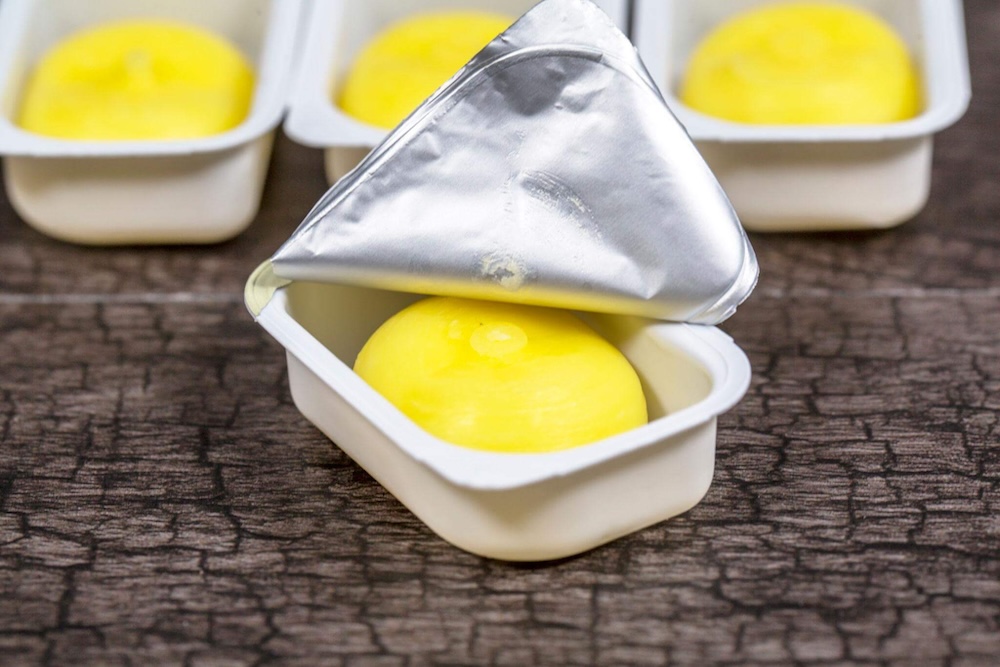
The film should separate from the tray in a controlled way, allowing consumers to open the package without excessive effort. At the same time, the seal must remain reliable throughout the product’s intended distribution and storage conditions.
This is especially important for single-portion butter, processed cheese, and other products that consumers open directly from the tray.
The opening experience also affects how people perceive the product. A clean, predictable peel can make everyday packaging feel more convenient and carefully designed.
For packaging manufacturers, however, peelability should never be assessed in isolation. It needs to be evaluated alongside seal strength, barrier requirements, tray material, and the conditions under which the package will be used.
Barrier Performance and Shelf-Life Protection
Easy opening is only one part of the job. For butter and cheese, the film must also provide the barrier performance required by the product.
Depending on the formulation, packaging format, storage conditions, and target shelf life, the structure may need to help limit oxygen and moisture transmission. Light protection may also be important for certain products.
Multilayer films can combine different materials to meet these needs. Common options include:
- PET: Often used for mechanical strength, dimensional stability, and printability.
- Aluminum foil or metallized layers: Used in suitable structures when stronger barrier protection is required.
- PE and other sealing materials: Selected according to the sealing requirements and compatibility with the container.
- Specialized peel-seal layers: Designed to provide controlled opening when matched with the appropriate tray or container.
The exact structure depends on the application. A film designed for one type of cheese tray may not be suitable for a different tray material or butter format.
It is also important to distinguish between aluminum foil and metallized films. Their barrier properties are not identical, and the appropriate choice depends on the performance requirements of the package.
There is no single easy-peel structure that works best for every butter and cheese product. Material selection should start with the product’s protection needs, then account for the sealing system and production conditions.
Balancing Barrier Performance, Peelability, and Processability
One of the main challenges in easy-peel film development is bringing several functions together in a relatively thin material structure.
The film may need to provide:
| Requirement | Why It Matters |
|---|---|
| Oxygen barrier | Helps limit oxygen exposure and protect product quality |
| Moisture barrier | Helps control moisture transfer |
| Light protection | Supports protection for light-sensitive products |
| Heat sealing | Creates a reliable closure with a compatible container |
| Peelability | Allows consumers to open the package with controlled force |
| Mechanical strength | Helps resist tearing and damage during handling |
| Processability | Supports consistent performance on the customer’s packaging line |
These requirements do not always move in the same direction.
A structure with stronger barrier properties does not automatically provide better peelability. Increasing seal strength does not necessarily improve the consumer experience, either. And a film that performs well in one laboratory test may still be difficult to run at the required production speed.
The solution is to design the structure around the complete packaging system.
Instead of selecting a film based on one attractive specification, manufacturers should consider how its different properties work together during filling, sealing, transportation, storage, and use.
This application-based approach helps reduce the risk of choosing a material that performs well in theory but creates problems in practice.
Why Packaging Line Compatibility Matters
A film does not operate on its own. It must work with the customer’s equipment, container, and production process.
Different tray materials can require different sealing conditions. Changes in temperature, pressure, dwell time, and line speed can also affect seal quality and peel force.
Before selecting an easy-peel lidding film, it helps to clarify a few key details:
- What material is the tray or container made from?
- What sealing temperature, pressure, and dwell time are used?
- Is the product filled before the tray is sealed?
- Is there a risk of product residue reaching the sealing area?
- What opening force and peel behavior are expected?
- What oxygen, moisture, or light barrier is required?
- Will the product be refrigerated, frozen, or stored at ambient temperature?
- What shelf life does the finished package need to support?
These details help define the right material structure and sealing approach.
Testing under realistic production conditions is also important. A film should be evaluated not only for its material properties, but also for seal consistency, opening behavior, and compatibility with the intended packaging line.
The aim is to find a solution that works reliably in day-to-day production, not just under ideal test conditions.
Applications of Easy-Peel Film for Butter and Cheese
Easy-peel lidding films can be considered for a range of dairy packaging formats. The suitable structure will depend on the product, container, and required performance.
Butter
Portion packs, trays, cups, and other single-use or multi-use formats may benefit from controlled opening and suitable protection against oxygen and moisture.
Processed cheese
Cheese portions and trays often require a combination of reliable sealing, product protection, and convenient opening.
Sliced and portioned cheese
These applications may require a balance of barrier performance, mechanical strength, and easy access to the product.
Other dairy and chilled-food products
Depending on the container material and storage conditions, easy-peel technology may also be suitable for selected dairy and chilled-food applications.
In every case, the film should be matched to the specific product and packaging system. A structure that works well for one application should not automatically be assumed to work for another.
Easy-Peel Film Is a Packaging System, Not Just a Material
The performance of an easy-peel package depends on more than the film itself.
Film structure, tray material, sealing conditions, filling process, and product characteristics all influence the final result. A weakness in any one of these areas can affect the performance of the complete package.
That is why the most useful evaluation goes beyond a single material specification. It considers whether the film can provide reliable sealing, controlled peeling, appropriate barrier protection, and consistent production performance under real operating conditions.
For butter and cheese manufacturers, the goal is straightforward: protect the product, maintain the required quality throughout its intended shelf life, and make the package easy to open.
Achieving all three requires the right combination of materials, design, and process control.
NOUPACK’s View: Start With the Application, Not Just the Film
At NOUPACK, we believe that good flexible packaging starts with understanding how the package will actually be used.
For butter and cheese easy-peel film, that means looking beyond whether a film seals or peels well in isolation. We consider the product’s protection requirements, the tray material, the customer’s sealing equipment, and the expected opening experience as parts of the same problem.
A film with excellent barrier properties is not the right choice if it cannot run consistently on the customer’s line. A package that opens easily is not a good solution if its seal cannot withstand normal handling and distribution.
The right answer is the one that brings these requirements together.
That is why we believe packaging development should begin with practical questions about the application, followed by material selection and testing under relevant conditions. The structure should be chosen to fit the product and production process, rather than forcing the application to fit a standard material.
For us, easy-peel film is not simply about making packaging easier to open. It is about helping customers find a workable balance between product protection, sealing reliability, production efficiency, and consumer convenience.
Because the best packaging is not the film with the most impressive specification. It is the one that performs reliably where it matters most: in real production and everyday use.