Among all flexible packaging formats, 3 side seal pouches remain one of the most widely used and practical solutions on the market today.
You can find them everywhere. Snack packs, seasoning sachets, frozen foods, pharmaceutical products, and single-use liquid packaging all rely on this simple format.
The reason is straightforward. 3 side seal pouches are cost-effective, material-efficient, and easy to run on high-speed packaging lines.
But no packaging format is perfect.
While 3 side seal pouches offer many benefits, they also have limitations that are often overlooked. Understanding both sides is essential when choosing the right packaging structure for your product.
At Noupack, we believe packaging decisions should be based on real product requirements, not on what is most common or visually appealing.
What Is a 3 Side Seal Pouch?
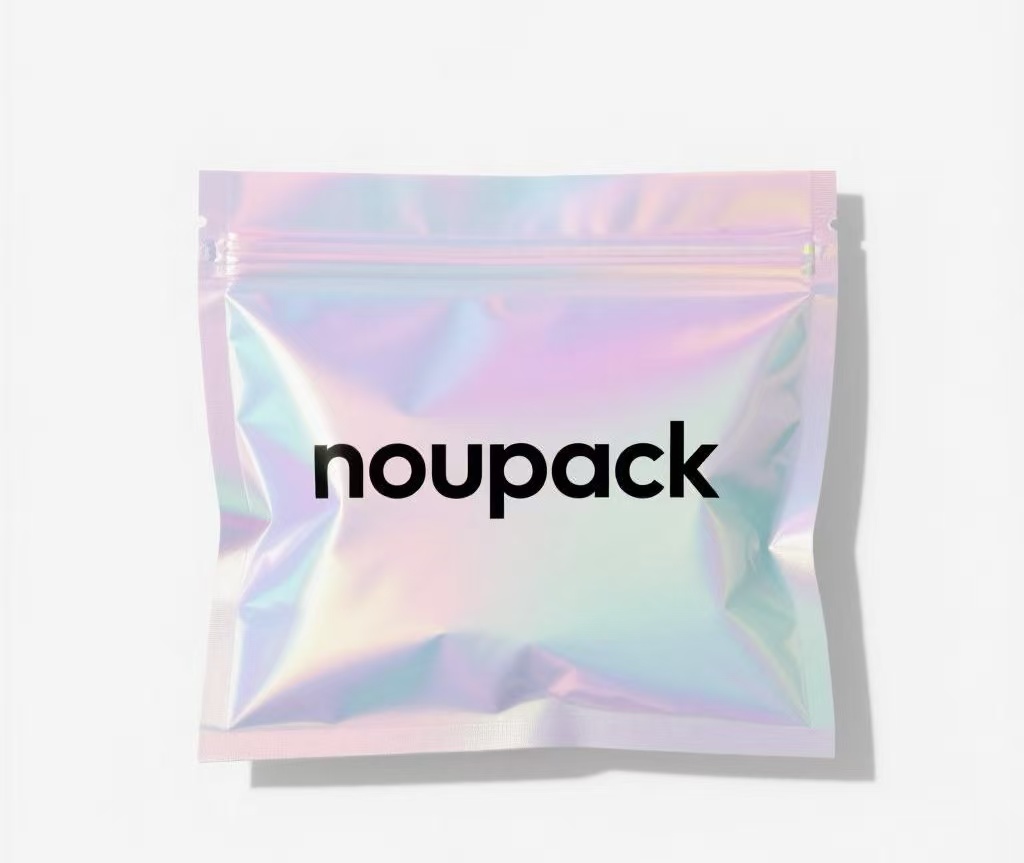
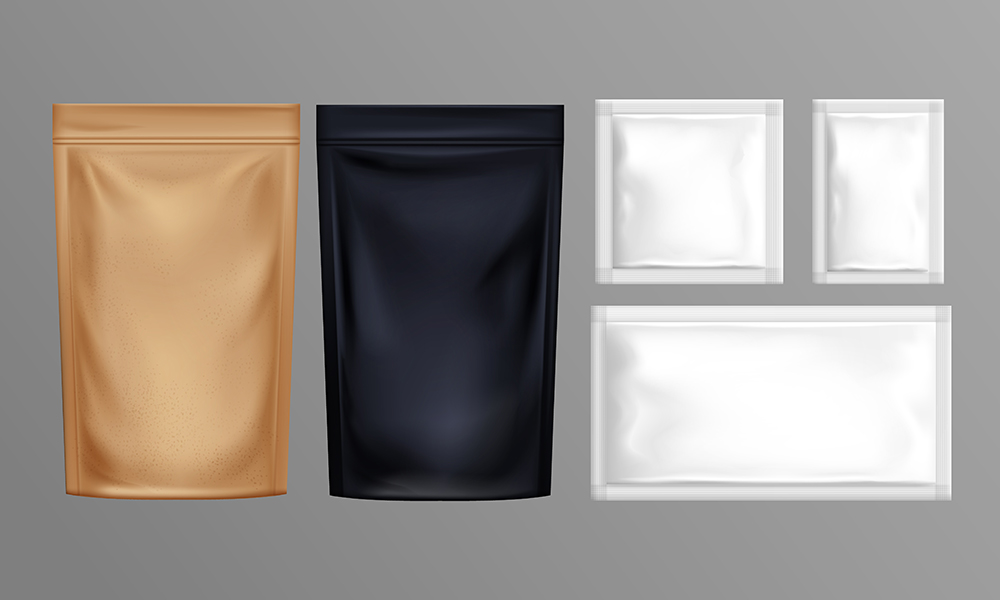
A 3 side seal pouch is a flat flexible package sealed on three sides, with one side left open for filling before the final seal is made.
The pouch is usually produced by:
- Folding a single web of film
- Sealing three edges using heat or ultrasonic technology
- Filling the pouch with product
- Sealing the remaining open side
The finished package is compact, lightweight, and highly efficient in terms of material use.
This format is commonly used for:
- Snacks and confectionery
- Instant powders and seasonings
- Frozen foods
- Pharmaceutical sachets
- Condiments and single-use liquids
Because of its simple structure, the 3 side seal pouch remains one of the most economical choices in flexible packaging.
Materials and Barrier Performance
The performance of a 3 side seal pouch depends largely on the material structure.
Different products require different levels of barrier protection, seal strength, durability, and appearance.
Kraft Paper
Kraft paper is often selected when brands want a natural and environmentally friendly look. It is usually combined with barrier layers to improve moisture and oxygen protection.
PET and OPP Films
PET and OPP provide excellent print quality, dimensional stability, and surface strength. They are commonly used as the outer layer in laminated packaging structures.
PE and CPP
PE and CPP are frequently used as the inner sealing layer because they offer reliable heat sealing and good flexibility.
Nylon and EVOH
These materials provide strong oxygen barrier properties and are ideal for products that are sensitive to oxidation or moisture.
Aluminum Foil and Metallized Films
These materials deliver superior protection against light, oxygen, and water vapor. They are widely used for products that require extended shelf life.
The final structure should always be chosen according to the product’s shelf-life goals, filling process, and distribution conditions.
How 3 Side Seal Pouches Are Manufactured
The production process is simple in concept, but precision is critical.
After the packaging film is printed and laminated, pouch-making equipment seals the edges using heat or ultrasonic technology.
Additional features can be added during converting, including:
- Tear notches
- Hanging holes
- Rounded corners
- Euro slots
- Easy-open designs
These enhancements improve convenience and shelf presentation without sacrificing production efficiency.
Compatibility with Filling Equipment
One of the biggest advantages of 3 side seal pouches is their excellent compatibility with automated filling systems.
Pouches can be filled with:
- Powders
- Granules
- Liquids
- Solid products
Their lightweight and compact design supports:
- High-speed packaging lines
- Lower transportation costs
- Reduced storage requirements
For manufacturers running large volumes, these operational benefits can significantly improve overall efficiency.
Key Advantages of 3 Side Seal Pouches
Efficient Material Usage
Compared with some stand-up pouch formats, 3 side seal pouches use less film, which helps reduce both packaging costs and material consumption.
Flexible Barrier Design
They can be produced using a wide range of laminated structures, allowing barrier properties to be tailored to specific product needs.
High Production Efficiency
The simple shape allows for stable, fast manufacturing and filling operations.
Excellent Space Utilization
Flat pouches take up less space during storage and transportation than rigid packaging alternatives.
Limitations to Consider
Despite their many strengths, 3 side seal pouches are not the best choice for every application.
Seal Intersection Weakness
The corners, where multiple seals meet, are the most critical points in the package.
If sealing conditions are not optimized, these areas may be prone to:
- Weak seals
- Micro-leaks
- Reduced long-term integrity
This is especially important for liquid products and vacuum packaging.
Limited Reclosability
Most 3 side seal pouches are intended for single-use products.
Once opened, they usually cannot be resealed unless a zipper or other closure feature is added.
Surface Sensitivity
Glossy films can show fingerprints, scratches, and scuffs more easily, which may affect shelf appearance.
Recycling Challenges
Many high-performance pouches use multi-layer laminates made from different materials.
These structures provide excellent protection, but they are often more difficult to recycle than mono-material alternatives.
When to Choose a 3 Side Seal Pouch
This format is especially suitable when:
- Portion control is important
- Single-use convenience is desired
- High-speed production is required
- Space-saving packaging is beneficial
However, packaging selection should always be based on the specific needs of the product and the end user.
Important factors include:
- Product sensitivity
- Filling conditions
- Shelf-life targets
- Consumer usage patterns
Packaging Should Match Product Reality
Good packaging is not defined by appearance alone.
It must protect the product during production, transportation, storage, and final use.
3 side seal pouches remain one of the most versatile and cost-effective flexible packaging formats available. When the right materials, sealing conditions, and structural design are used, they provide excellent protection and operational efficiency.
At Noupack, we believe every packaging structure should be engineered around the real demands of the product. A well-designed pouch does more than contain a product. It protects quality, supports efficient manufacturing, and strengthens the customer experience.
That is why we work closely with our clients to develop packaging solutions that balance performance, cost, and sustainability. Because the best packaging is not simply the most popular option. It is the one that works reliably in the real world.