When Do You Really Need Nylon (PA) in Flexible Packaging?
When discussing flexible packaging materials, conversations often focus on barrier properties—oxygen transmission rates, moisture protection, shelf life, and product freshness.
While these factors are certainly important, they are not always the primary reason packaging fails.
For many food products, especially those with sharp edges, hard surfaces, or vacuum packaging requirements, mechanical strength can be just as critical as barrier performance.
This is where Nylon (PA), also known as Polyamide, becomes an essential material.
Known for its outstanding toughness, puncture resistance, and durability, PA helps packaging withstand the physical stresses of processing, transportation, storage, and retail handling. It is one of the most widely used functional materials in flexible packaging for meat, seafood, frozen foods, and vacuum-packed products.
In this article, we’ll explore what PA is, why it is used, and how to determine whether your packaging structure truly requires it.
What Is Nylon (PA)?
Polyamide (PA), commonly referred to as Nylon, is a high-performance plastic film frequently used in multilayer flexible packaging structures.
Unlike materials that are selected primarily for printing or heat sealing, PA is valued for its mechanical properties.
Key advantages of PA include:
- Excellent puncture resistance
- Outstanding toughness
- High abrasion resistance
- Strong flex-crack resistance
- Good impact strength
- Excellent performance under vacuum conditions
Because PA is not a sealant material, it is rarely used alone. Instead, it is typically incorporated into multilayer laminations where it serves as the structural reinforcement layer.
Common packaging structures include:
- PA/PE
- PET/PA/PE
- PA/EVOH/PE
- PET/PA/EVOH/PE
These structures combine strength, barrier performance, and sealability to meet the requirements of demanding packaging applications.
Why Puncture Resistance Matters
Not all products place the same demands on packaging materials.
Many food products have sharp edges, irregular surfaces, or hard components that can create concentrated stress points within a package.
Examples include:
- Bone-in beef and pork
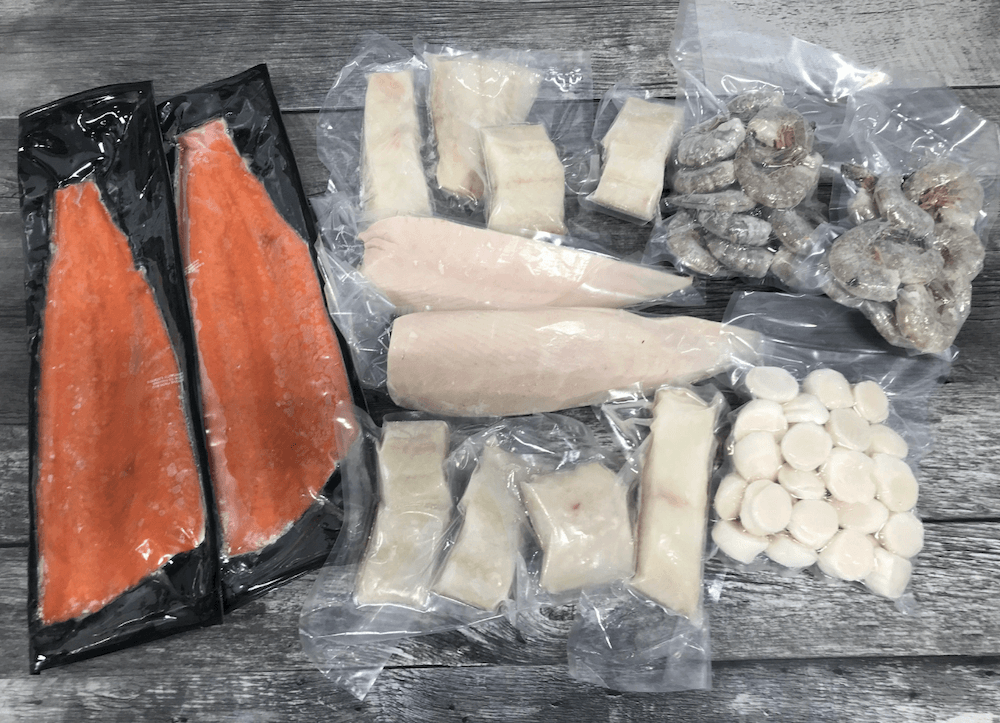
- Frozen fish and seafood
- Shrimp and shellfish
- Crab and lobster products
- Processed meats
- Frozen ready meals
During filling, transportation, stacking, and distribution, these products can puncture conventional packaging films, leading to leaks, contamination, freezer burn, and product spoilage.
Compared with PET or PE alone, PA offers significantly greater resistance to tearing and puncture, helping maintain package integrity throughout the supply chain.
For many food manufacturers, preventing package failure is often more valuable than achieving slightly better barrier performance.
Why PA Performs So Well in Vacuum Packaging
Vacuum packaging creates unique mechanical challenges.
When air is removed from the package, the film tightly conforms to the product’s shape. Any bone, shell, corner, or protrusion becomes a concentrated pressure point against the packaging material.
Films with insufficient toughness may develop pinholes or punctures during storage and transportation.
PA performs exceptionally well under these conditions because it combines flexibility with high tensile strength and resistance to stress cracking.
This allows the package to maintain a tight vacuum seal while minimizing the risk of mechanical failure.
As a result, PA is widely used in:
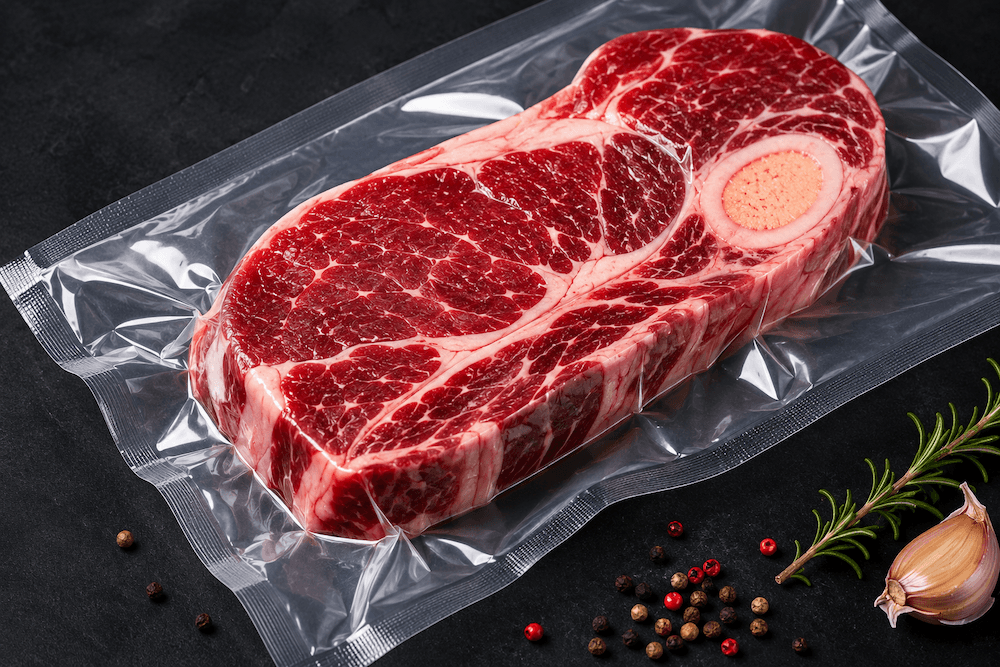
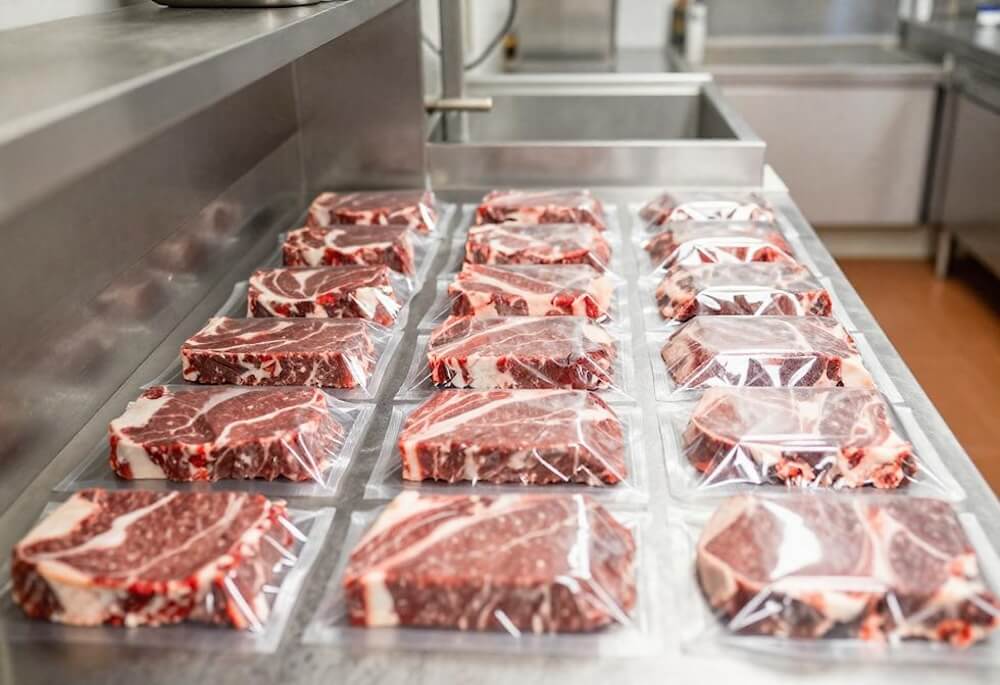
- Vacuum-packed beef
- Fresh meat products
- Seafood packaging
- Cheese packaging
- Frozen food packaging
- Sous-vide products
When packaging products under vacuum, strength often becomes more important than barrier performance alone.
Applications in Beef Packaging
Fresh and processed beef products typically require:
- Vacuum packaging
- Long shelf life
- Resistance to puncture
- Durability during transportation
Bone-in cuts and irregular meat surfaces can easily damage packaging structures that lack sufficient toughness.
A common solution is a PET/PA/PE structure:
- PET provides excellent printability and appearance
- PA delivers puncture resistance and durability
- PE ensures reliable heat sealing
This combination creates a packaging structure capable of withstanding distribution stresses while maintaining product quality and presentation.
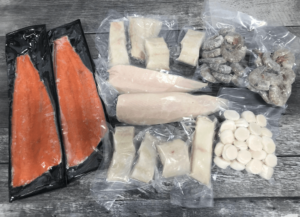
Applications in Seafood Packaging
Seafood packaging often presents even greater challenges.
Products such as shrimp, crab, lobster, shellfish, and frozen fish frequently feature sharp shells, fins, or hard edges capable of damaging standard films.
Additionally, seafood products are often:
- Vacuum packaged
- Frozen
- Exported internationally
- Stored for extended periods
These conditions place significant mechanical stress on the packaging structure.
PA helps reduce the risk of punctures, seal failures, and product loss while maintaining package integrity throughout cold-chain transportation.
This is why PA-based structures are commonly used for:
- Frozen shrimp
- Crab products
- Fish fillets
- Shellfish packaging
- Vacuum-packed seafood
Does PA Improve Barrier Performance?
Although PA is primarily selected for its mechanical strength, it also contributes moderate oxygen barrier properties.
However, PA should not be considered a high-barrier material.
When stronger protection against oxygen or moisture is required, PA is often combined with additional barrier materials such as:
- EVOH
- Aluminum foil
- Metallized PET
- Metallized OPP
These combinations allow manufacturers to achieve both durability and extended shelf life.
For example:
PET / PA / EVOH / PE
provides excellent puncture resistance while delivering significantly enhanced oxygen protection.
Limitations of Nylon (PA)
Despite its many advantages, PA is not the right solution for every packaging application.
Higher Material Cost
PA is generally more expensive than standard polyethylene films, increasing overall packaging costs.
Moisture Sensitivity
PA can absorb moisture from the environment, which may reduce some of its barrier performance under certain conditions.
Not a Heat-Sealing Layer
Unlike PE or CPP, PA cannot function as the primary sealing layer and must be combined with suitable sealant materials.
Because of these factors, PA should be used only when its mechanical benefits justify the additional investment.
PA vs. PET: Understanding the Difference
A common misconception is that PET and PA perform similar functions because both appear in laminated packaging structures.
In reality, they serve very different purposes.
| Property | PET | PA |
|---|---|---|
| Printability | Excellent | Limited |
| Stiffness | High | Moderate |
| Puncture Resistance | Good | Excellent |
| Vacuum Packaging Suitability | Moderate | Excellent |
| Flex-Crack Resistance | Moderate | Excellent |
PET primarily contributes appearance, dimensional stability, and printing performance.
PA contributes toughness, durability, and puncture resistance.
This is why many high-performance packaging structures use both materials together.
How to Determine Whether You Need PA
Rather than selecting PA based solely on product category, manufacturers should evaluate the actual risks the package will face.
Consider the following questions:
- Does the product have sharp edges?
- Will the package be vacuum sealed?
- Will the product be frozen?
- Will it experience rough handling during transportation?
- Is puncture resistance critical to maintaining shelf life?
If the answer to several of these questions is yes, incorporating PA into the structure may provide significant value.
Strength Matters More Than Many Brands Realize
When discussing packaging performance, oxygen and moisture barriers often dominate the conversation.
Yet in many real-world applications, package failure is not caused by poor barrier properties—it is caused by mechanical damage.
A vacuum package with excellent oxygen protection provides little value if it is punctured by a bone, shell, or sharp product edge during transportation.
This is why Nylon (PA) remains one of the most valuable materials in flexible packaging for meat, seafood, frozen foods, and vacuum-packed products.
Its ability to withstand stress, absorb impact, and resist punctures helps protect the package when it matters most.
In many cases, durability is the first barrier that must be achieved before any other barrier property can deliver its intended benefit.
Noupack’s Perspective: Use PA Where It Creates Real Value
At Noupack, we often see packaging structures being either over-engineered or under-engineered.
Some buyers automatically request PA because they have used it before, while others try to eliminate it entirely to reduce costs.
In reality, neither approach is always correct.
The decision should always start with the product itself.
For products with bones, shells, sharp edges, vacuum packaging requirements, or frozen distribution conditions, PA can significantly reduce the risk of package failure and product loss.
However, for products with smooth surfaces and low puncture risk, a carefully designed PET/PE or high-performance PE structure may achieve the required performance at a lower cost.
The best packaging structure is not necessarily the one with the most layers or the highest specification.
It is the structure that delivers the required performance at the lowest total cost.
At Noupack, we believe successful packaging design is about balancing protection, functionality, and economics—not simply adding more materials.
When strength matters, Nylon (PA) is often the material that makes the difference.f