In flexible packaging and flexographic printing, material discussions often focus on films. However, paper-based substrates remain widely used across applications such as wipes, food packaging, and outer wraps.
Choosing the right paper is not only about appearance—it directly affects print quality, structural performance, and application suitability.
This article outlines the most commonly used paper types in flexographic printing, along with their practical roles and key selection considerations.
Liner Paper: Functional, Not Visual
Liner paper is typically a low-cost, uncoated paper used for protection or separation rather than printing.
It is commonly applied as:
- Interleaving material in rolls
- Protective layers during transport
- Internal separation sheets
Because it is not intended for visual presentation, printability is not a concern. Instead, the focus is on mechanical reliability and cost efficiency. Liner paper serves a purely functional role within the production process.
Light Coated Paper: Balancing Cost and Print Quality
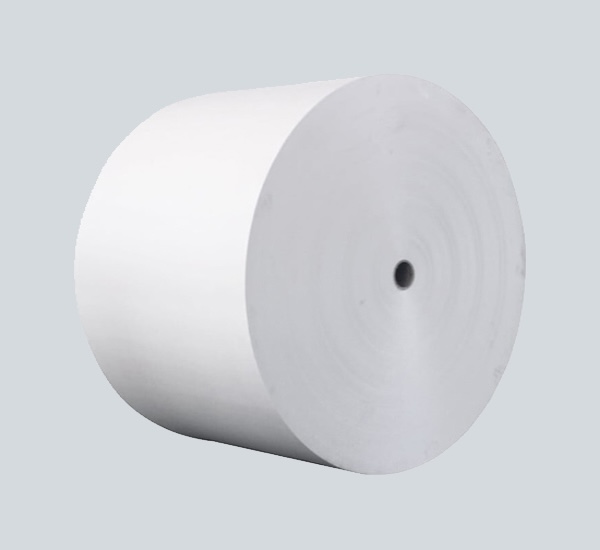
Light coated paper features a thin coating layer that improves surface smoothness while maintaining good ink absorption.
Compared to uncoated paper, it delivers better print clarity, while remaining more cost-effective than heavily coated alternatives. This makes it a practical option for applications that require a clean appearance without premium printing costs.
It is commonly used in products such as wet wipes packaging, where visual quality and cost control must be balanced.
Coated Art Paper (Single/Double Coated): For High-Precision Printing
Coated art paper, including single-coated and double-coated variants, is designed for applications where visual performance is critical.
With a thicker coating layer, it provides:
- High surface smoothness
- Strong whiteness
- Excellent color reproduction
These properties make it suitable for detailed graphics and brand-focused designs. In flexographic printing, coated paper supports more precise ink transfer, resulting in sharper and more consistent visual output.
Kraft Paper: Strength and Natural Positioning
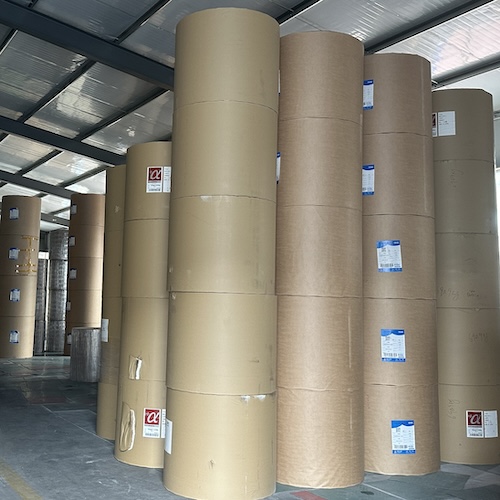
Kraft paper, especially unbleached types, is known for its high mechanical strength and natural brown appearance.
Its advantages include:
- Strong tear resistance
- Good durability in handling
- Compatibility with water-based inks
Because of its absorbent surface, ink penetration is stable, producing durable prints. Kraft paper is often selected when both structural strength and a natural brand image are important.
CCBK Paper: Combining Strength and Printability
CCBK (Coated Bleached Kraft Board) combines the strength of kraft fibers with a coated surface that improves printability.
It offers:
- Structural strength similar to kraft paper
- A white surface for better visual presentation
- More stable printing performance than uncoated materials
This balance makes it suitable for applications such as seasoning packaging, where both durability and branding are required.
Offset Paper: Practical for Simple Printing Needs
Offset paper is an uncoated material with a relatively rough surface and strong ink absorption.
It is characterized by:
- Good ink absorption
- Lower cost
- Suitability for text and line-based designs
While it does not deliver the same color vibrancy as coated paper, it performs reliably in applications where visual complexity is limited and cost efficiency is a priority.
Biodegradable Coated Paper: Combining Sustainability and Functionality
Biodegradable coated paper has gained attention as brands look for alternatives to traditional plastic-based laminations.
This type of paper is designed to decompose under specific environmental conditions, such as composting, soil, or marine environments, breaking down into carbon dioxide, water, and biomass without leaving harmful residues or microplastics.
To achieve this, the paper surface is typically coated with biodegradable polymers that provide functional performance while maintaining environmental compatibility.
Key Characteristics
- Coated with biodegradable layers (such as PLA or PHA)
- Designed for full biodegradability without plastic residue
- Can offer a balance between environmental performance and barrier functionality
Common Biodegradable Coating Materials
PLA (Polylactic Acid)
PLA is derived from renewable resources such as corn starch. It is industrially compostable and offers good transparency and processability, making it the most widely used biodegradable coating material in packaging.
PHA (Polyhydroxyalkanoates)
PHA is produced through microbial fermentation and is notable for its ability to degrade in marine environments. While it offers strong environmental advantages, its higher cost currently limits widespread adoption.
Choosing the Right Paper for Flexographic Printing
Selecting paper for flexographic printing requires more than choosing a category. Each material represents a different balance between printability, strength, cost, and sustainability.
A more practical approach is to evaluate:
- Required print quality
- Mechanical performance needs
- Environmental positioning
- Application-specific conditions
Rather than searching for a single “best” material, the goal is to identify the option that fits the product, process, and brand expectations simultaneously.