In the flexible packaging industry, the choice of printing technology dictates the chemical composition of the ink and the functional integrity of the package. Whether a product is destined for the food aisle or a medical facility, the ink’s performance under specific environmental conditions is a critical factor in the product’s success.
A fundamental priority in modern production is safety; all utilized inks are food-grade and formulated to meet international environmental standards. However, the properties of these inks vary significantly between Gravure and Flexo printing processes.
Gravure Printing: The Role of Solvent-Based Inks
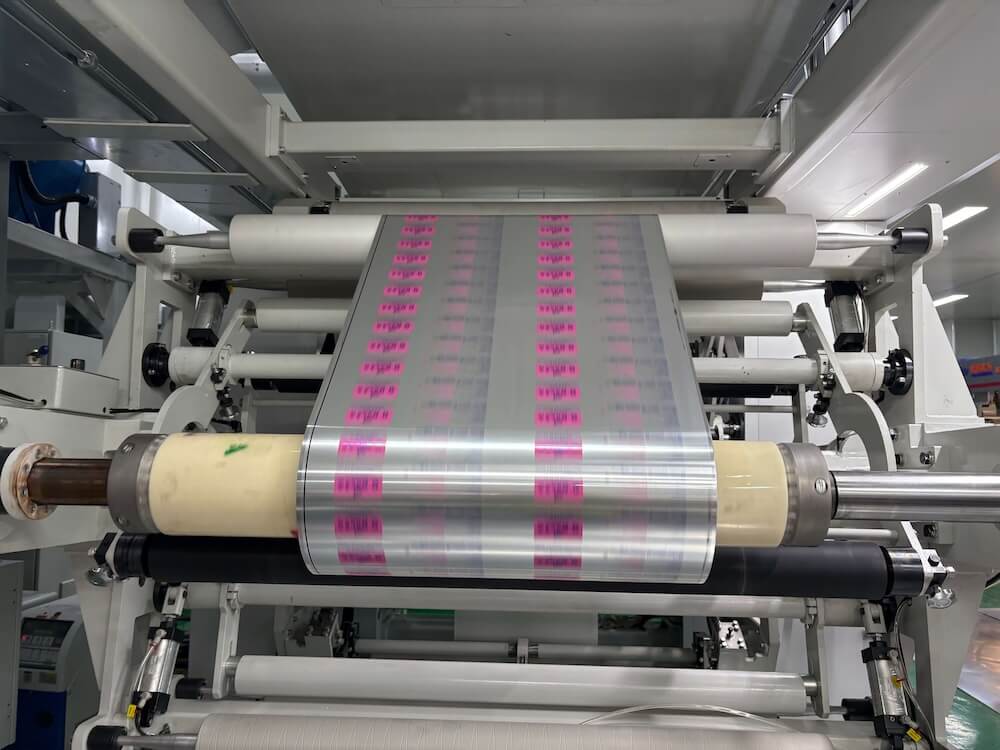
Gravure printing is established for its high-speed efficiency and superior image reproduction. To achieve these results on non-porous plastic substrates like BOPP, PET, and PE, it typically employs solvent-based inks.
- Adhesion Performance: These inks are designed to “bite” into the plastic film, ensuring the design remains durable and resistant to scratching during transport.
- Color Density: Solvent inks allow for a high pigment concentration, resulting in the rich, vibrant colors required for high-end retail packaging.
- Rapid Drying: The solvent evaporates quickly, leaving behind a stable and vibrant pigment layer.
- Environmental Engineering: Modern solvent-based formulations are engineered to ensure no harmful residues remain once the drying process is complete.
Flexo Printing: Water-Based Inks and Sustainability
Flexographic printing has gained significant traction due to its sustainable profile. Unlike gravure, flexo predominantly utilizes water-based inks, which offer distinct environmental and safety advantages.
- Emission Reduction: By using water as the primary carrier rather than volatile solvents, these inks have significantly lower VOC (Volatile Organic Compound) emissions.
- Food-Grade Stability: Naturally low-odor and highly stable, water-based inks are ideal for sensitive food packaging where preventing migration is essential.
- Flexible Ink Film: These inks create a thinner, more flexible layer, making them suitable for lightweight pouch applications.
Specialized Functionality: Alcohol Resistance
A notable technical advancement in flexo printing is the development of specialized Alcohol-Resistant Inks. Standard inks often dissolve or smear when exposed to harsh chemicals, making them unsuitable for certain hygiene and medical products.
- The 75% Alcohol Test: These functional inks are engineered to withstand direct exposure to 75% concentration alcohol.
- Information Integrity: This ensures that branding and critical instructions remain legible on medical-grade packaging during sterilization and use.
Noupack Perspective: Engineering the Right Balance
At Noupack, we believe that ink selection is not just a manufacturing step, but a vital part of product engineering. While gravure remains the benchmark for aesthetic depth in large-scale retail, the shift toward flexo represents a move toward functional specialization. Our technical focus is on bridging the gap between high-performance durability and environmental responsibility, ensuring that “green” solutions like water-based inks do not compromise the protective requirements of the product.