For coffee brands, aroma is everything.
It is often the first quality signal consumers experience when opening a package. And it is one of the fastest attributes to disappear when packaging performance is misjudged.
Most conversations about coffee packaging focus on barrier values, especially oxygen and moisture resistance. These factors matter. But aroma retention depends on far more than barrier numbers on a specification sheet.
Packaging structure, degassing behavior, and long-term seal stability all play decisive roles in preserving coffee quality throughout its shelf life.
This article looks at why aroma loss still occurs in so-called high-barrier coffee packaging, where common structural blind spots exist, and how packaging design can better protect aroma over time.
Why Coffee Aroma Is Uniquely Difficult to Protect
Roasted coffee releases hundreds of volatile aromatic compounds.
These compounds are extremely sensitive to:
-
Oxygen exposure
-
Temperature fluctuation
-
Pressure changes inside the package
At the same time, freshly roasted coffee continues to emit carbon dioxide for days or even weeks. This creates a fundamental contradiction. The package must release internal gas while preventing oxygen ingress and aroma escape.
Balancing these opposing forces is where many packaging solutions fail.
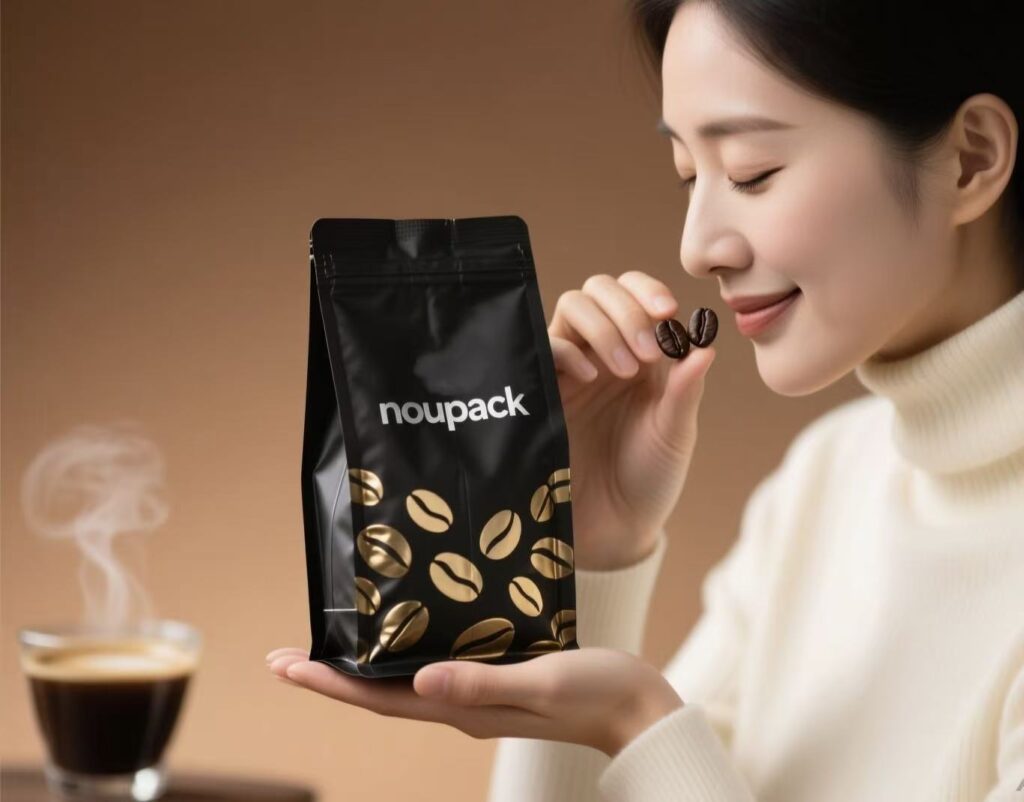
The Hidden Trade-Off. Degassing vs. Aroma Loss
One-way degassing valves are a standard solution in coffee packaging.
They prevent package bursting and allow controlled CO₂ release. But they also introduce a potential pathway for aroma loss.
Even high-quality valves are not completely neutral:
-
Micro-leakage can develop over time
-
Valve performance shifts with pressure and temperature changes
-
Aromatic compounds can exit along with CO₂
When valve selection is not aligned with the coffee’s degassing profile and the film structure, aroma fade can occur even when oxygen barrier performance looks excellent on paper.
Why High-Barrier Materials Still Fail in Practice
Many coffee packages rely on aluminum-based or high-barrier composite films. These materials offer strong theoretical protection. In real-world conditions, performance depends less on the material itself and more on how the structure behaves over time.
Common failure points include:
1. Seal Degradation Under Continuous Pressure
Coffee packaging is constantly under internal stress from CO₂ release.
If the sealing layer is not engineered to maintain integrity under sustained pressure, micro-channels can form. These invisible pathways allow both oxygen ingress and aroma escape.
2. Structural Fatigue During Distribution
Compression, vibration, and temperature cycling during transport gradually weaken film structures.
Even without visible damage, microscopic cracks or flex fatigue can compromise aroma retention long before the product reaches the consumer.
3. Imbalanced Structural Design
Some packages are over-engineered for barrier but under-engineered for mechanical stability. Others are downgauged aggressively to reduce material use, unintentionally sacrificing aroma protection.
In both cases, aroma loss is not a material failure. It is a structural one.
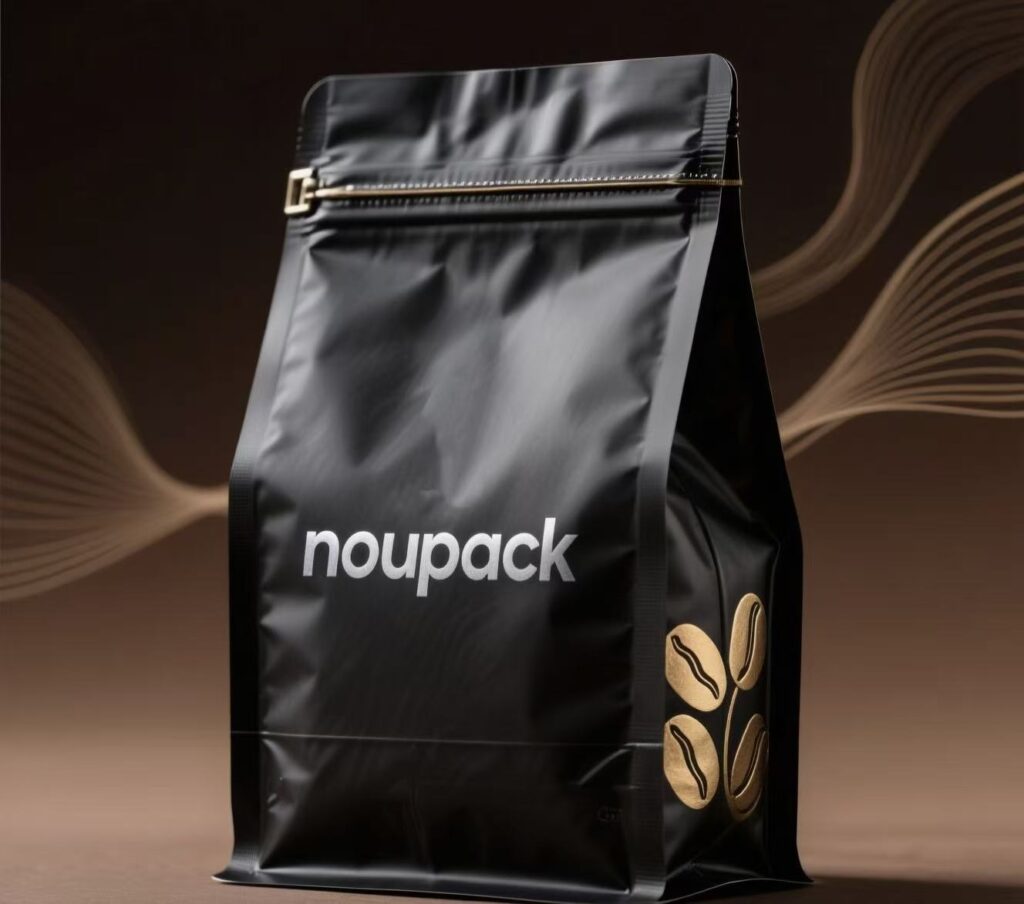
Packaging Structure as an Aroma Management System
Effective coffee packaging should be treated as a system, not a single-material decision.
A balanced structure integrates:
-
A barrier layer to limit oxygen ingress and aroma transmission
-
A structural layer to resist deformation and pressure changes
-
A sealing layer that remains stable under continuous CO₂ load
-
A valve system matched precisely to the coffee’s degassing behavior
When these elements are designed in isolation rather than as a unified system, aroma loss becomes far more likely.
Whole Bean vs. Ground Coffee. Different Priorities, Different Risks
Coffee behaves differently depending on its format.
Whole Bean Coffee
-
Slower degassing
-
Lower surface area
-
Longer shelf-life expectations
Packaging can prioritize long-term barrier stability and seal durability.
Ground Coffee
-
Rapid aroma release
-
Higher oxygen sensitivity
-
Shorter quality window
Structures must emphasize fast oxygen exclusion and extremely tight sealing control.
Using the same packaging structure for both formats often results in compromised performance.
Export and Long-Distance Distribution Amplify the Risk
For brands selling across regions or climates, aroma retention challenges multiply.
Extended supply chains introduce:
-
Wide temperature swings
-
Pressure variation during air or sea transport
-
Longer storage before retail placement
Under these conditions, structural resilience becomes just as important as barrier performance. Any weakness will be magnified over time.
Key Takeaway. Aroma Retention Is a Structural Outcome
Coffee aroma is not preserved by barrier material alone.
It is the result of controlled interaction between barrier performance, degassing behavior, seal integrity, and mechanical stability.
Instead of asking whether a film is “high-barrier,” coffee brands are better served by asking a more practical question:
Does this packaging structure manage gas, pressure, and aroma consistently across the entire shelf life?
Answering that question early reduces quality complaints, product returns, and brand risk. Especially in competitive coffee markets where sensory experience drives loyalty.
Noupack’s Perspective. Designing for Real-World Coffee Performance
At Noupack, we view coffee packaging as an aroma control system, not a barrier specification.
Our approach starts with understanding how a specific coffee behaves after roasting. Its degassing curve. Its sensitivity to oxygen. Its intended shelf life and distribution path. Only then do we design the structure.
Sometimes that leads to high-barrier solutions. Sometimes it means adjusting seal layers, mechanical balance, or valve integration rather than adding more barrier.
Because aroma loss rarely comes from a single weak point. It comes from small mismatches across the system.
Packaging that performs in the lab but fails in the market is not sustainable. True quality protection happens when structure, process, and product behavior are aligned.
For coffee brands, aroma is the promise. Packaging must be engineered to keep that promise. Not just on day one, but until the last cup is brewed.